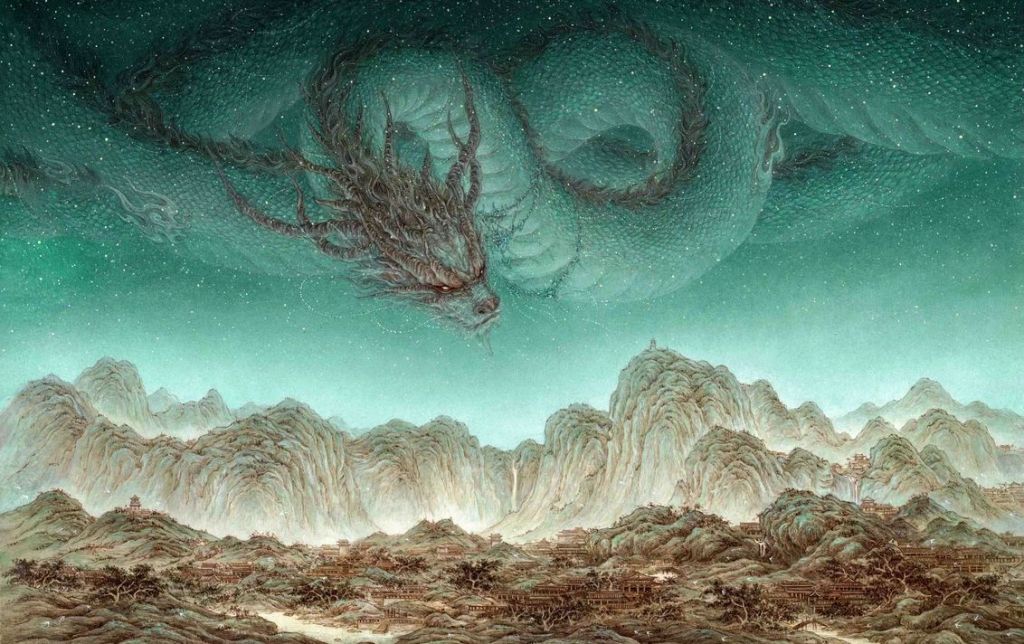
Requested by my good friend Coco, this post is dedicated to Chinese mythology. Chinese mythology, much like Greek and Roman mythology, was once treated by the people as a religious belief. People actively prayed to the gods and deities for their blessings. Even the emperors were afraid of angering the heavens. Of course, time has taken its course, and these myths are treated today as what they are – cultural symbols. Modern China is a majority atheist country, with its mythological stories seamlessly weaved into its traditions such as holidays, beliefs, zodiac symbols, and others. From creation myths to cosmology, the tales of Chinese mythology is worth the time and effort for us to explore.
The Original – Classic of Mountains and Seas
Classic of Mountains and Seas (山海经 – shān hǎi jīng)was a book focused on geographical folklores that detailed the relationship between humans and cosmic forces, natural disasters, and shamanism. It can be considered as the earliest form of a scientific mapping of the world and its various forces.
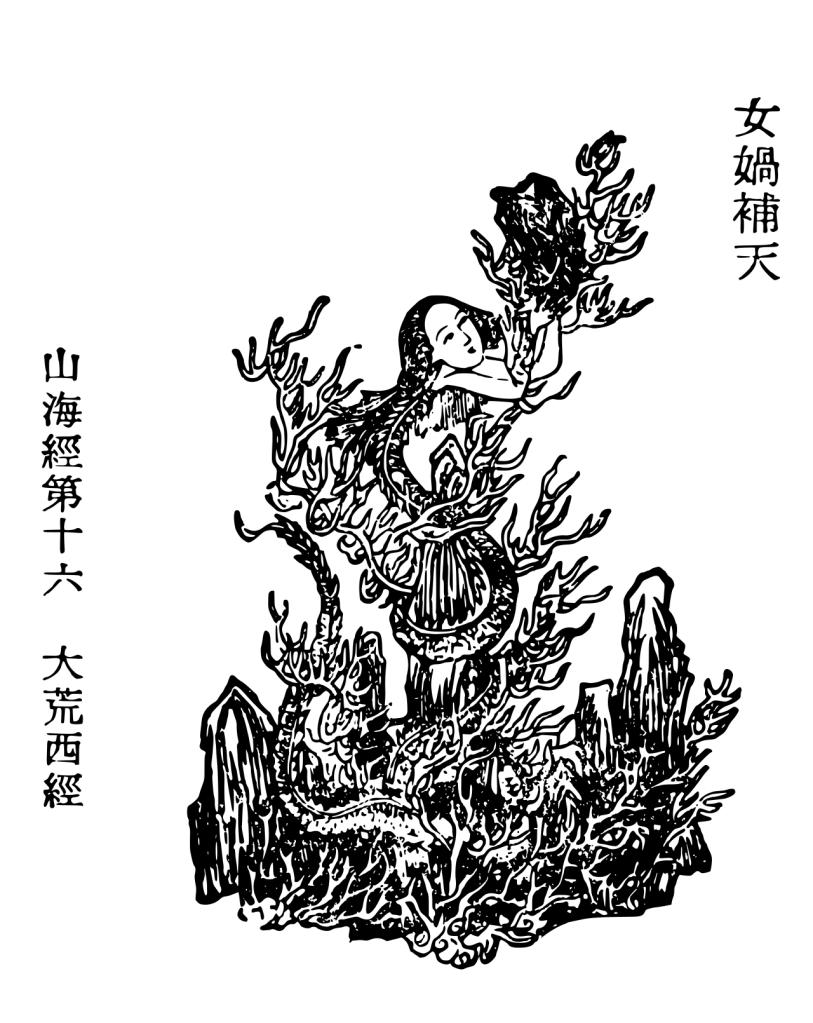
Nüwa (女娲)
The mother goddess of humanity, who created humans, repaired the sky and protected the mortal realm in an event known as “Nuwa mends the sky” (女娲补天 – nǚ wā bǔ tiān)
- Going back to more ancient times, the four pillars were broken; the nine provinces (China was known as the “Nine provinces” [九州 – jiǔ zhōu], back then. Sharing a name with the modern day Japanese island of Kyushu) were in tatters. Heaven did not completely cover [the earth]; Earth did not hold up [Heaven] all the way around [its circumference]. Fires blazed out of control and could not be extinguished; water flooded in great expanses and would not recede. Ferocious animals ate blameless people; predatory birds snatched the elderly and the weak. Thereupon, Nüwa smelted together five-colored stones in order to patch up the azure sky, cut off the legs of the great turtle to set them up as the four pillars, killed the black dragon to provide relief for Ji Province, and piled up reeds and cinders to stop the surging waters. The azure sky was patched; the four pillars were set up; the surging waters were drained; the province of Ji was tranquil; crafty vermin died off; blameless people [preserved their] lives.
– Huainanzi (淮南子) 139 BCE
Fuxi (伏羲)
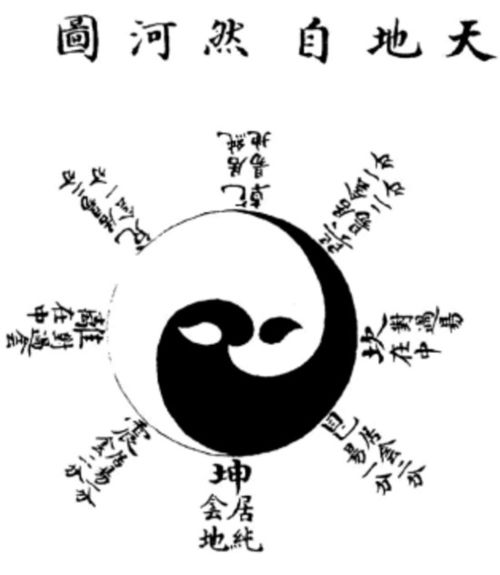
Nüwa’s husband (debatably) and brother (debatably), who was also credited with creating humanity (debatably). More notably, he was known as the inventor of hunting, fishing, domestication, as well as the Taoist Eight Trigrams (八卦 – bā guà) after observing the eight fundamental building blocks of nature – heaven, earth, water, fire, thunder, wind, mountain, and lake. The diagram represents the different opposing forces of nature and how they balance out in Yin and Yang (阴阳).
Hou Yi (后羿)
A legendary archer who was known for shooting down suns (后羿射日). According to legends, there used to be 10 suns in the sky. One day, all 10 of them decided to come out and play, which began scorching the earth. Emperor Yao or the Jade Emperor, depending on which source you read, tasked Hou Yi with taking down the suns. He shot down 9 of them, returned the mortal realm to a livable temperature, and and saved the Earth.
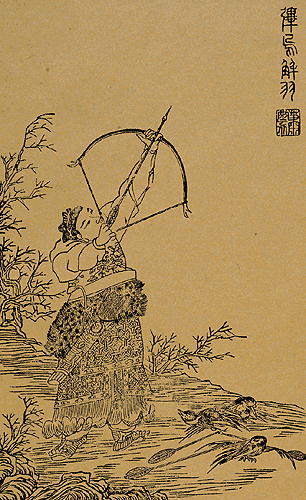
As a reward, the gods gave Hou Yi two elixirs of immortality. Hou Yi did not want to become immortal without his wife Chang’e (嫦娥) , so he left it at home with her. One day, while he was out hunting, one of Hou Yi’s students broke into his house to steal the elixir. While at home, Chang’e quickly realized it, and consumed both elixirs to prevent them from falling into the hands of this morally corrupt student of Hou Yi. She became immortal and flew to the moon.
Chang’e (嫦娥)
An extremely prominent figure in both ancient Chinese cosmic mythology and modern day popular culture. The goddess of the moon with unparalled beauty. Her name literally means “Chang the Beauty”. After consuming the elixirs in Hou Yi’s story, Chang’e flew upwards towards the heavens, and chose to stay on the moon, in order to be close with her husband Hou Yi.
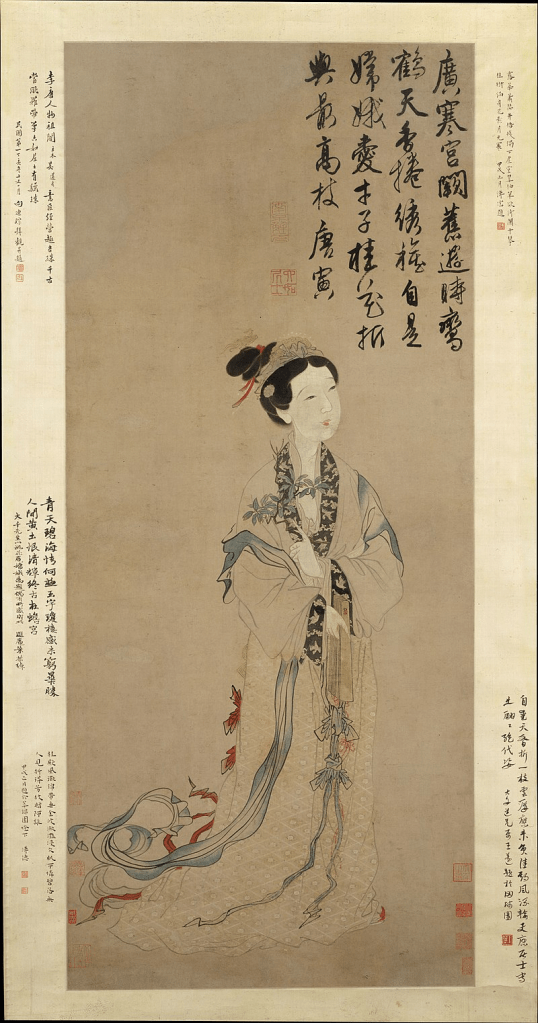
While on the moon, she lived in the vast and cold “Moon Palace” (廣寒宮 – guǎng hán gōng) with her companion – the Jade Rabbit (玉兔 – yù tù), who was said to be continuously making the elixir of life.
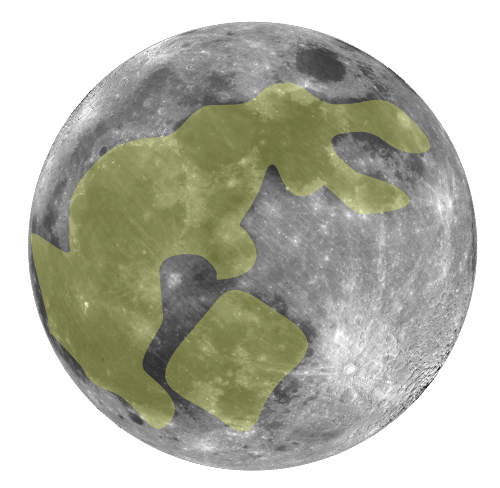
Back in the mortal realm, Chang’e’s husband Hou Yi continued to mourn the loss of his wife. He felt responsible about what had transpired while he was out hunting, so he displayed some fruits and cakes that Chang’e enjoyed, and killed himself out of guilt. This story inspired the Mid-Autumn Festival (中秋节 – zhōng qiū jié), one of the most culturally important holidays (usually in September or October) for Chinese people all over the globe. People eat mooncakes, fruits, drink tea, admire the full moon, and celebrate the year’s harvest with beautiful lanterns.
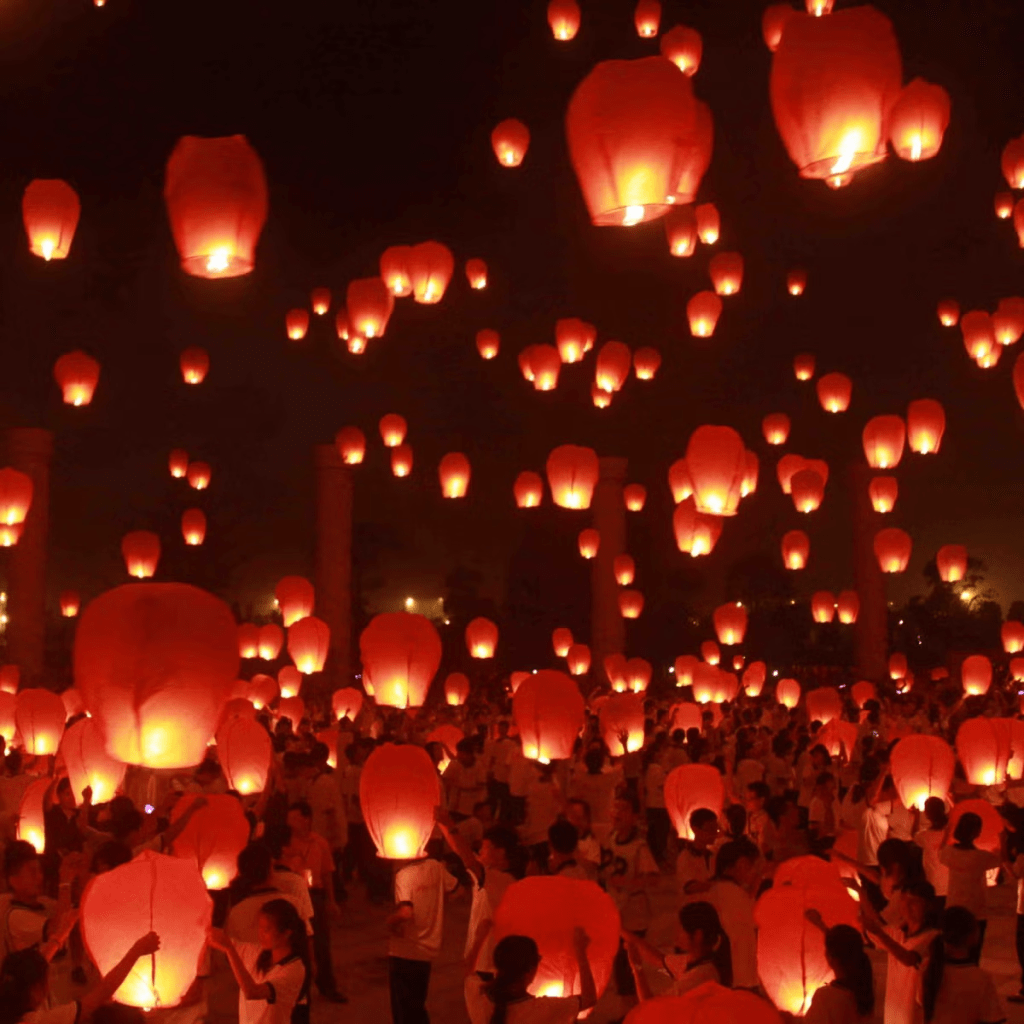
The Mid-Autumn Festival also influenced other Asian holidays, that occur on the same day of or near the Mid-Autumn Festival. Each of them takes one or more characteristics of the Chinese “Mid-Autumn Festival” and focus on those.
- Japan: Tsukimi (月見) – “Moon Viewing”
- Korea: Chuseok (추석) – “Autumn Evening”
- Vietnamese: Tết Trung Thu – “Mid-Autumn Festival”
- Myanmar: Thadingyut Festival – “Festival of Lights”
- Cambodia: Bon Om Touk – “The Water and Moon Festival”
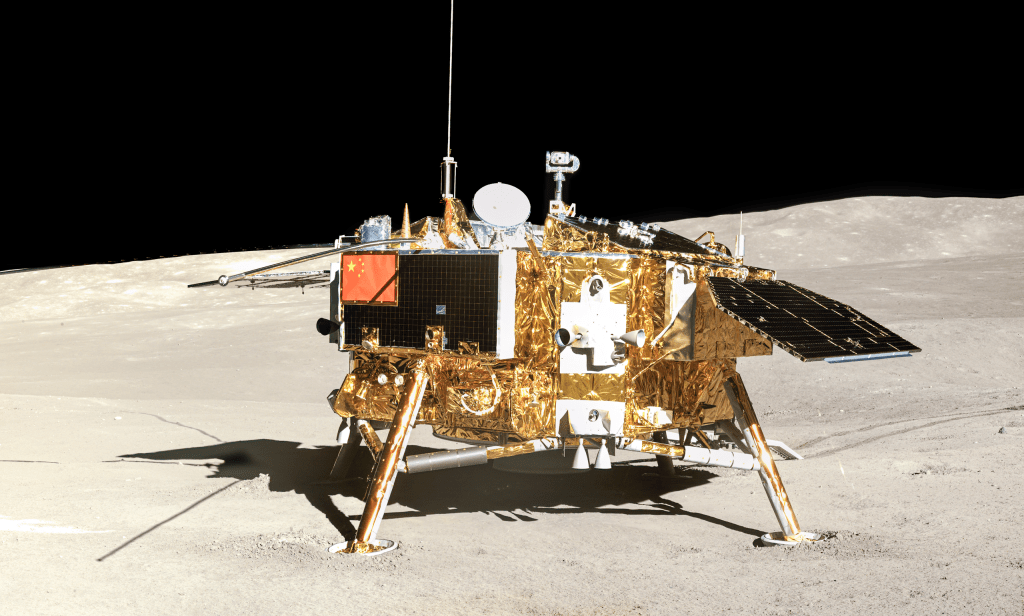
Chang’e’s name was also famously used in China’s lunar exploration program. In 2019, a spacecraft named “Chang’e 4” (嫦娥四号) made a successful landing on the far side of the moon, and deployed a robot rover named “Yutu”, named after the Jade Rabbit, for exploration mission.
Chang’e is also referenced in many pop culture titles, such as “Touhou Project“, Netflix animated feature film “Over the Moon”, fantasy novel “Daughter of the Moon Goddess“, classic novel “Journey to the West” (does that count as pop culture?), a skin for the Overwatch character “Mei”, and most famously, the protagonist of the popular anime and manga series “Sailor Moon” by Naoko Takeuchi. Sailor Moon is a princess of the moon, whose love interest comes from Earth, and she goes by the name of “Tsukino Usagi”, a play on word that can be read as “Rabbit of the Moon”.
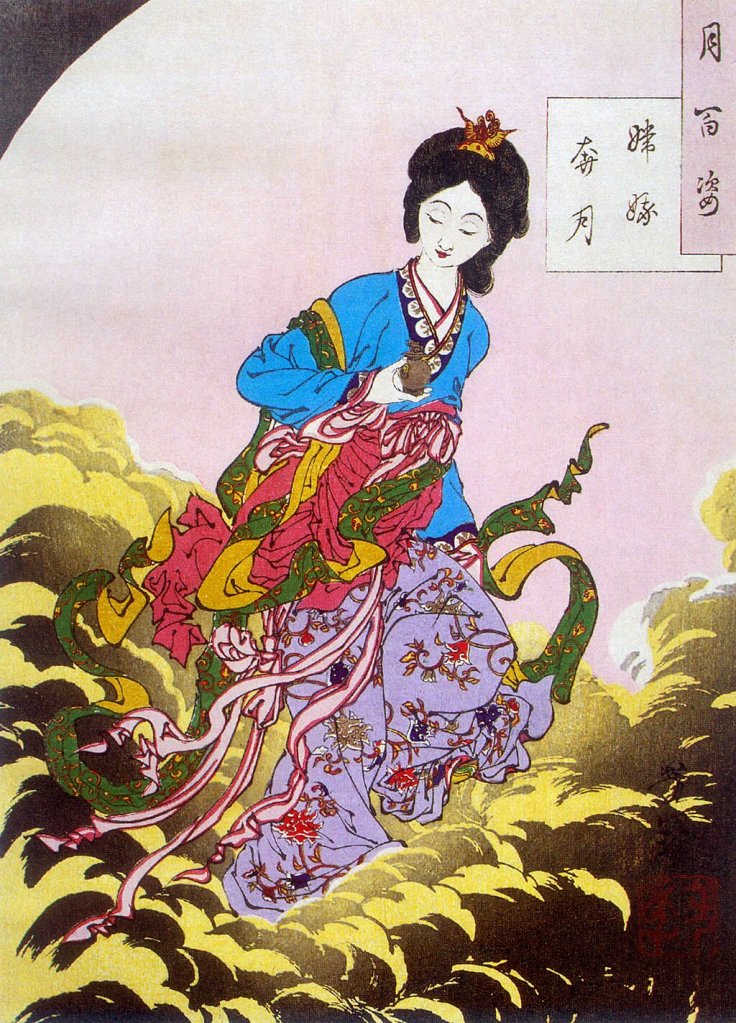
Chang’e is one of, if not, the most important figure in Chinese culture. She has made appearances in mythology, folklore, folk religion, Chinese Buddhism, Confucianism, and Taoism.
Jing Wei (精卫 – lit. “spirit guardian”)
The beloved daughter of the Flame Emperor, Yandi, who died in the Easter Sea when she was caught in a storm while playing alone. Her spirit became a small bird, and she decided to dedicate her life filling up the sea with twigs, pebbles, and stones, carrying them one by one. Her story, “Jingwei tries to fill the sea” (精卫填海), is a story about the indomitable human spirit, and an idiom of the same name is used to praise those with unwavering determination.
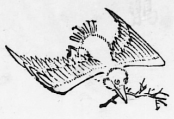
女娲补天: Nuwa mends the sky
后羿射日: Hou Yi shoots the suns
嫦娥奔月: Chang’e Ascends to the Moon
精卫填海: Jingwei tries to fill the sea
As you can see, Chinese people love using four character idioms or descriptions for names, even today
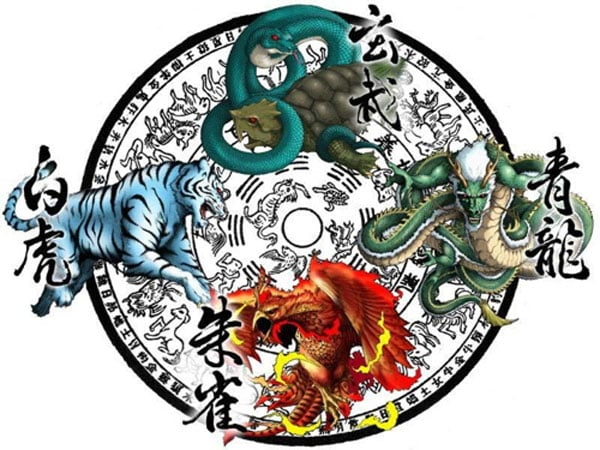
The Four Guardians (四象): Celestial Beasts of the Directions
Nearly 4000 years ago in the Shang dynasty, pre-historic Chinese sky watchers observed the sky, and connected the stars into illustrations of mythical beings – the Four Guardians were born. By the Han dynasty, ancient Chinese cosmology had matured and grouped the stars into the 28 lunar mansions (二十八宿). These constellations were then further categorized into four groups of seven, each corresponding to a cardinal direction, season, and mythical guardian. They also correspond with one of the five classic Chinese elements, metal, wood, water, fire, with earth being the center – the Yellow Dragon (dragon incarnate of the Yellow Emperor).
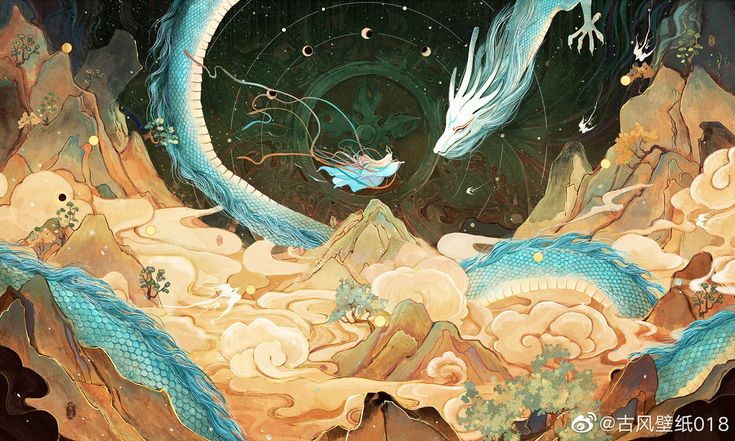
The Azure Dragon of the East: Qinglong (青龍 / 蒼龍 – cāng lóng)
- The Guardian of the East, arrives in the Spring.
- The seven Lunar Mansions in the East (东宫七宿): 角 (Jiǎo), 亢 (Kàng), 氐 (Dǐ), 房 (Fáng), 心 (Xīn), 尾 (Wěi), 箕 (Jī) rosed with the sun (east) like a dragon in the spring.
- Symbolic: rebirth, vitality, energy, benevolence, regalness
- Element: Wood (木)
- Apparently not a typical “Dragon / Loong” as the others. Chinese Loongs have canonical methods of reproduction, but Qinglong does not. It is everlasting as itself, never changing, never reproducing.
- “青龙见朝阳” – 李白
“The Azure Dragon appears with the morning sun.” – Li Bai - Overwatch’s Pharah has a skin based on the Qinglong.
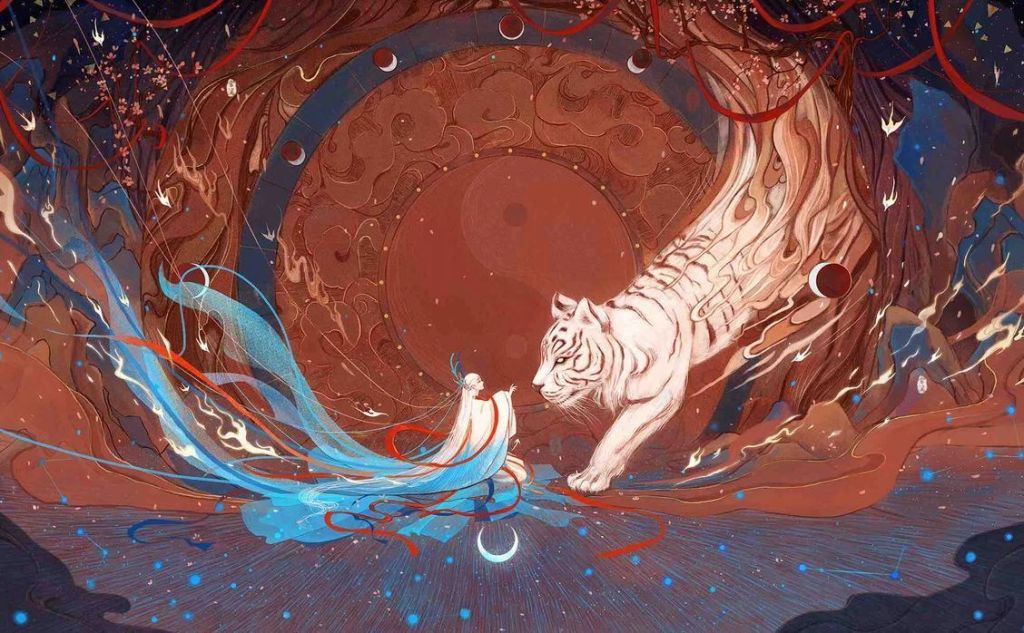
The White Tiger of the West: Baihu (白虎)
- The Guardian of the West, arrives in the Autumn.
- The seven lunar mansions of the west Lunar Mansions in the West (西宫七宿): 奎 (Kuí), 娄 (Lóu), 胃 (Wèi), 昴 (Mǎo), 毕 (Bì), 觜 (Zī), 参 (Shēn) formed the body of the White Tiger in the western sky in autumn, associated with harvest season.
- Symbols: military strength, authority, righteousness, war
- Element: Metal (金)
- Opposite to the Azure Dragon: tigers and dragons are often depicted as rivaling forces
- Traditionally used to ward off evil spirits – tiger imagery is commonly seen on doorways, weapons, and armor, also appears as a spirital general of Zhenwu (真武 – True Martial)
- West (desert and infertile land) is linked with death, and white is linked with mourning, so the White Tiger is a symbol of death and afterlife, also the death of the year (autumn), when plants begin to die off.
- Overwatch’s Genji has a skin based on the Baihu.
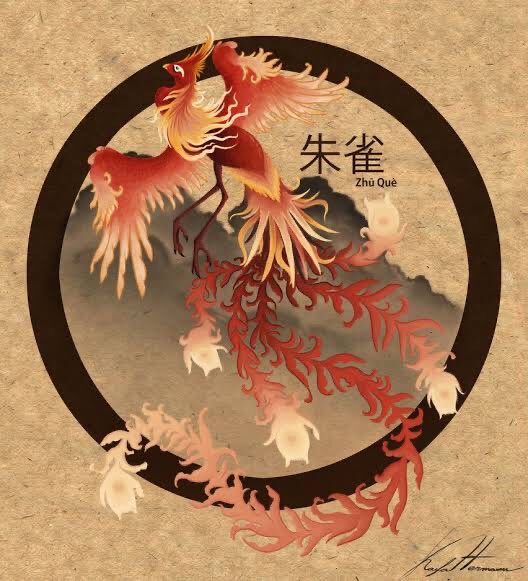
The Vermillion Bird of the South: Zhuque (朱雀)
- The Guardian of the South, arrives in the Summer.
- not a phoenix
- not a phoenix
- not a phoenix
- The seven Lunar Mansions in the South (南宫七宿) of 井 (Jǐng), 鬼 (Guǐ), 柳 (Liǔ), 星 (Xīng), 张 (Zhāng), 翼 (Yì), 轸 (Zhěn) illustrates a radiant bird spreading its wings across the summer night sky, signifying that life is at its peak.
- Symbols: flame, virtue, ceremony, ritual, royal dignity, communication with the Heaven
- Element: Fire (火)
- Often used in imperial clothes or seal
- Overwatch’s Mercy has a skin based on the Zhuque.
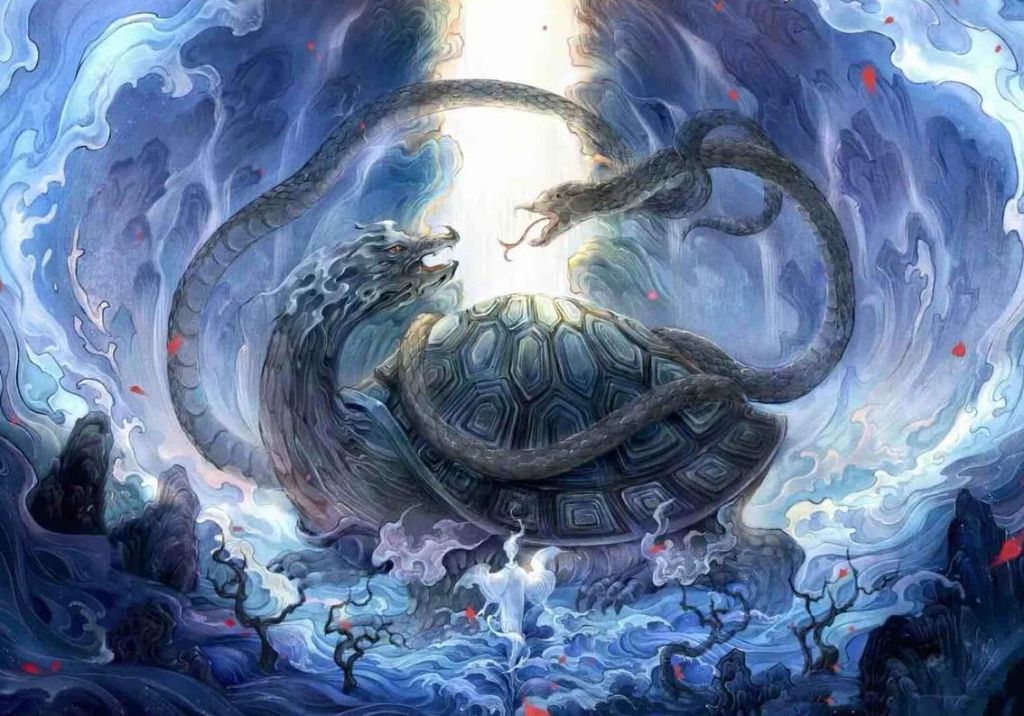
The Black Tortoise of the North: Xuanwu (玄武)
- The guardian of the North, arrives in the Winter.
- Name roughly translates to: “Dark Warrior” or “Mysterious Martial”
- Is a fusion of a tortoise and snake
- Seven lunar Mansions in the North (北宫七宿) 斗 (Dǒu), 牛 (Niú), 女 (Nǚ), 虚 (Xū), 危 (Wēi), 室 (Shì), 壁 (Bì), creates the black tortoise visible in the winter skies
- Element: Water (水)
- Evolved into a Taoist deity called “The Perfected Martial Emperor” (真武大帝 – Zhēnwǔ Dàdì)
- Symbols: balance, yin and yang, life and death, endurance, water and time
- Often used in protective charms, referenced in martial arts
- Overwatch’s Zarya has a skin based on the Xuanwu.
Other Major Mythical Creatures
Obviously, the most important mythical creature in Chinese mythology is the Dragon / Loong, which I have already dedicated an entire blog post on – read it here
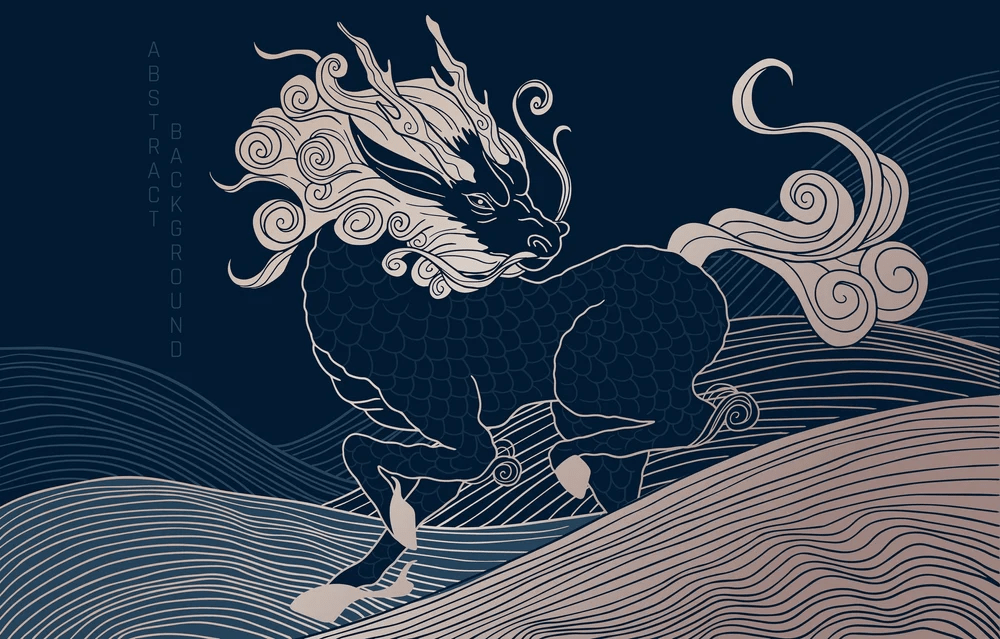
Qilin (麒麟): Akin to a unicorn. Also known as “Kirin” in Japanese. It is made up of deer body, dragon scales, and ox tail. It is said to be a symbol of peace and prosperity, appears with the arrival of a great sage or ruler.
During the Ming dynasty, Somali merchants brought two giraffes from Africa to the Ming government, and Chinese people thought they had finally found the legendary Qilin, and referred to them as such (until they realized that giraffes are just regular animals). However, Japan still kept the name “Kirin” for giraffes, sharing with the mythical creature.
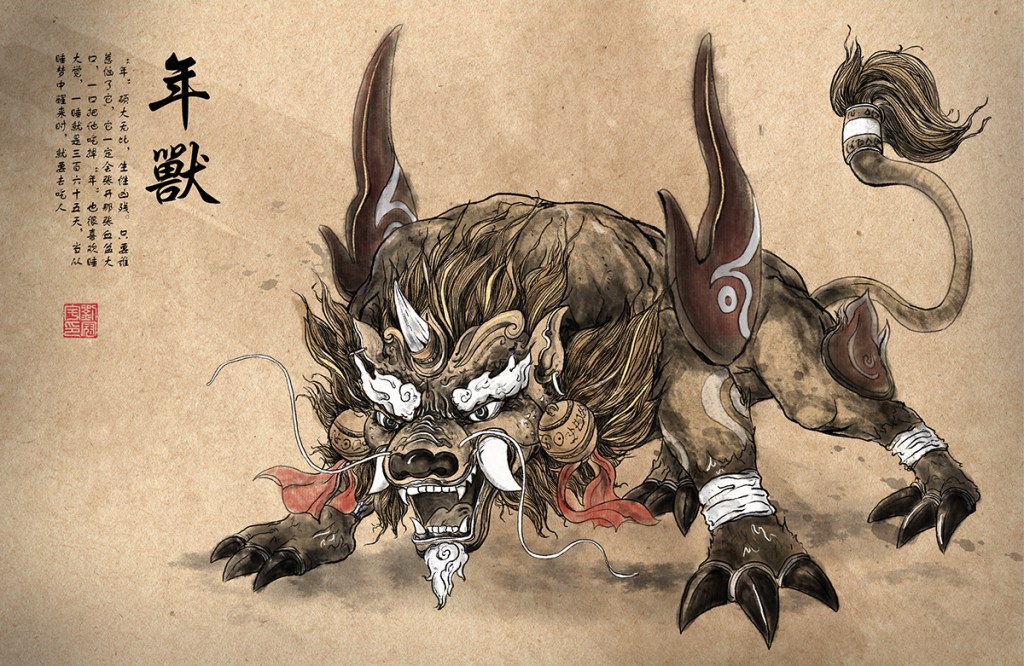
Nian (年兽 nian shou = year beast): A creature that shows itself at the beginning of the Chinese Lunisolar Calendar (also called the “Farmer’s Calendar”; It is NOT the Lunar Calendar, I don’t care how many times people use the wrong name. The Lunar Calendar is the Islamic Calendar) and feeds on humans and animals.
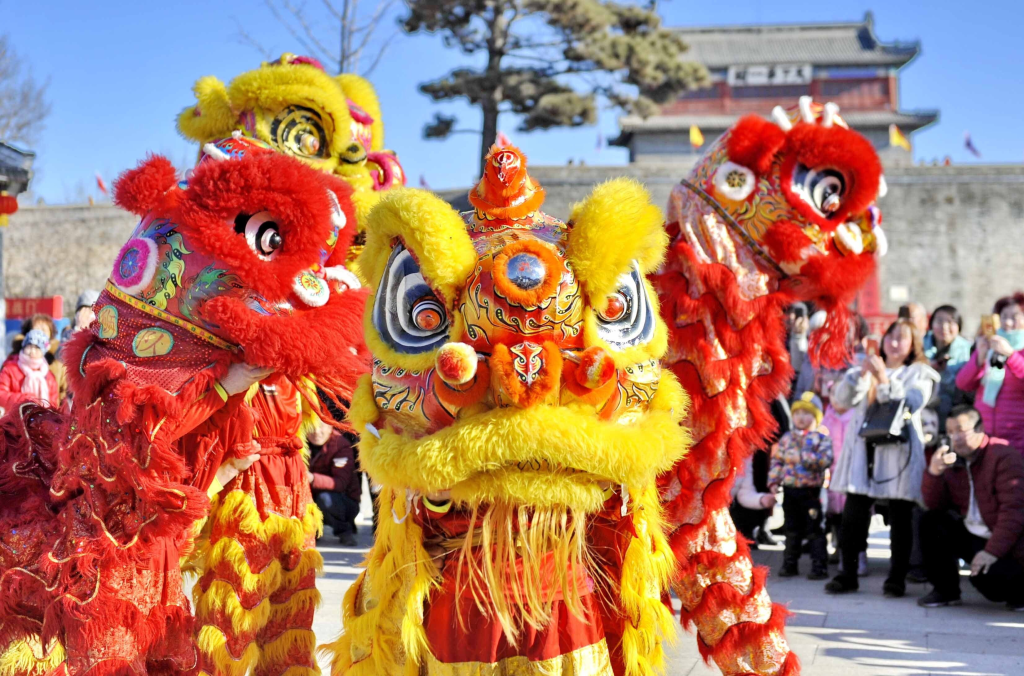
It has a few weaknesses that have become traditions during Chinese New Year: the colour red and loud noises. This is why we wear red, hang scrolls and pictures, and create loud noises with firecrackers and lion dances during Chinese New Year / Spring Festival (春节). I am not calling it the “Lunar New Year”. For starter, the naming is already inaccurate, as it does not use the “Lunar Calendar”. Also, every country that celebrates a variation of the Spring Festival has developed their own unique traditions, and should be respected as such by using their own individual names (Tết, Seollal, etc.) in the context of discussing traditional and cultural practices.
Taoist Immortal – Zhongli Quan (钟离权)
One of the Eight Immortals (八仙, Bāxiān) of Taoism, Zhongli Quan is also known as 正阳真人 (zhèng yáng zhēn rén – “Perfected One of True Yang”). He was once a general for the Han Dynasty, and ascended to immortality (仙人) after he mastered the Taoist art of alchemy. He was also able to transmutate stone into gold to help the poor and brought the sick back to health with his powerful fan. He represents the ideals of a leader – powerful, but benevolent.
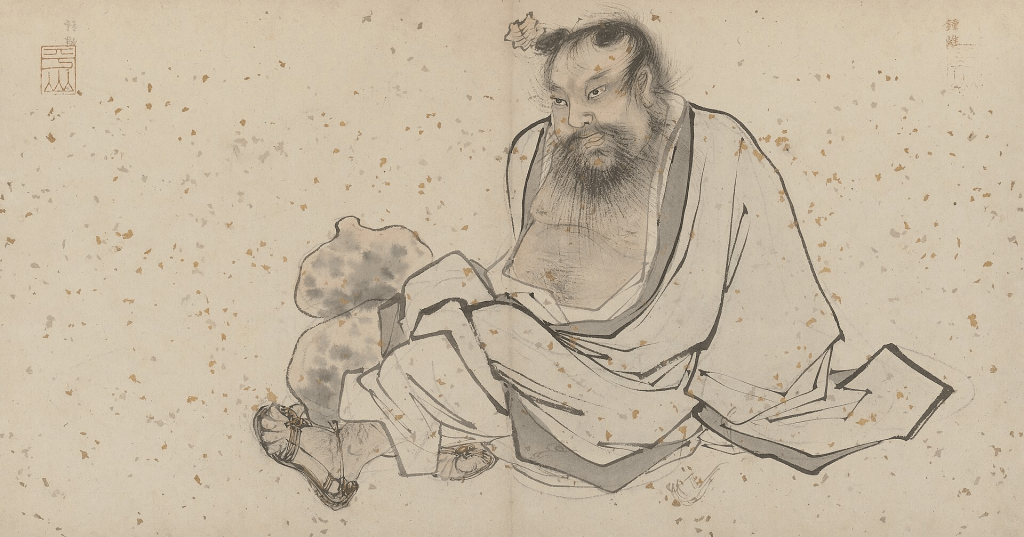
The Eight Immortals of Taoism each represented some kind of occupation or circumstance – a tale that tells its readers that anyone can achieve immortality through cultivation, virtue, or fate. Zhongli Quan represented wealth and military might. There was also scholarship, suffering, femininity, nobility, music, youth.
In hit game Genshin Impact by Chinese game developer and publisher Hoyoverse, the archon (god) of Liyue (fictional representation of Tang Dynasty China) is a man named “Zhongli” (钟离), clearly inspired by Zhongli Quan. The fictional Zhongli was considered an adepti (in-universe equivalent of Taoist “immortals” [仙人]). He also used to command an army, and has the power to turn stone into mora (the in-universe currency, highly resembles gold).
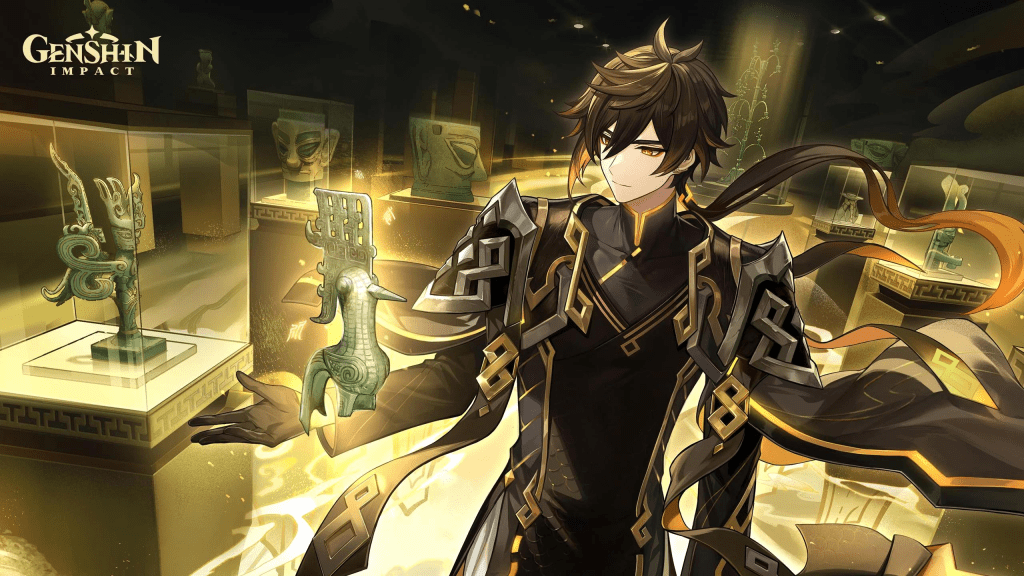
The reason I wanted to briefly talk about Zhongli Quan is because of his connection with Genshin Impact’s Zhongli, who I love. I don’t care about the other seven Taoist immortals.
Journey to the West (西游记) – A Fusion of Buddhist and Taoist Mythology
Any discussion about Chinese mythology is incomplete without addressing Journey to the West (西游记 xī yóu jì), one of the Four Great Classical Novels in Chinese literature (四大名著) alongside Romance of the Three Kingdoms (三国演义, sān guó yǎn yì), Water Margin (水浒传, shuǐ hǔ zhuàn), and Dreams of the Red Chambers (红楼梦, hóng lóu mèng).
Journey to the West was written by Wu Cheng’en (吴承恩) during the Ming Dynasty (1592). To truly understand Journey to the West, one must first understand Taoism, Buddhism, and the scholarly syncretism between the two – a cornerstone of Ming Dynasty intellectual and religious thought.
Up until this point, you have heard about “Taoism” a few times, but what does it mean?
Taoism (道教, dào jiào) is undoubtedly a founding philosophy in Chinese culture and legends. Although there is no definitive “founder” of Taoism that other belief systems usually can trace back to, it is generally agreed upon by scholars that the teachings of Taoism came from ancient philosopher Laozi (老子 – 6 BCE)‘s book, Tao Te Ching (道德经). It outlines “道” (dào) — the “Way”, or the natural order of life—and “德” (dé) — “virtue and morality”. Taoism has transformed over the centuries, from shamanistic traditions during the ancient era, to religious Taoism during the imperial era with rituals, gods, alchemy, seeking immortality, to the philosophical and scholar Taoism of today, with a focus on studying the texts of Laozi (老子) and Zhuangzi (庄子, co-founder of Taoism?), who emphasized spontaneity and freeing oneself from the shackles of conventions.
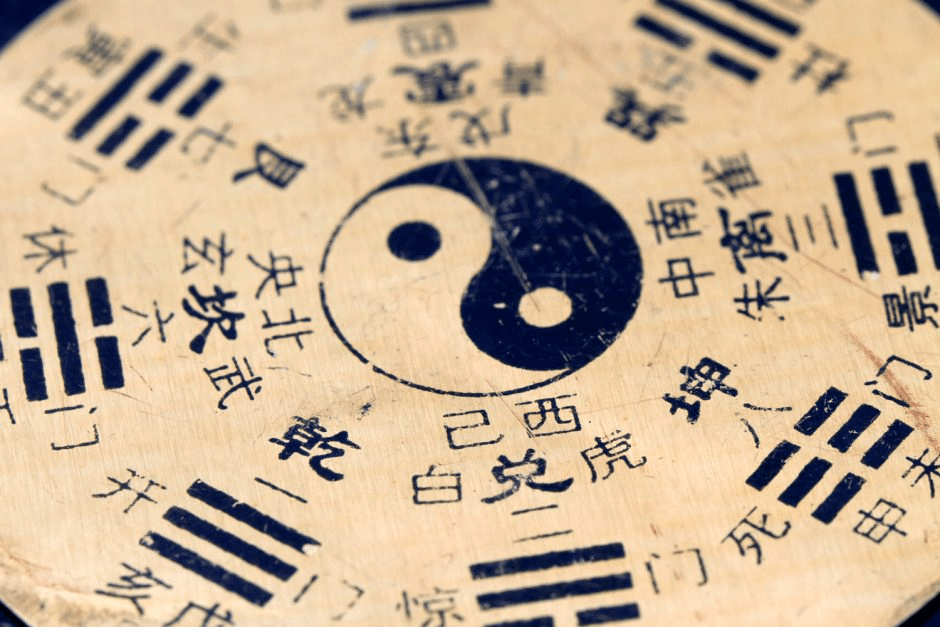
Alongside Taoism, Buddhism (佛教 fo jiao) became a central spiritual force in Chinese history.
Originating in India, it spread to China via the Silk Road—particularly through Dunhuang, often called the cradle of East Asian Buddhism—arriving in the 1st century BCE.
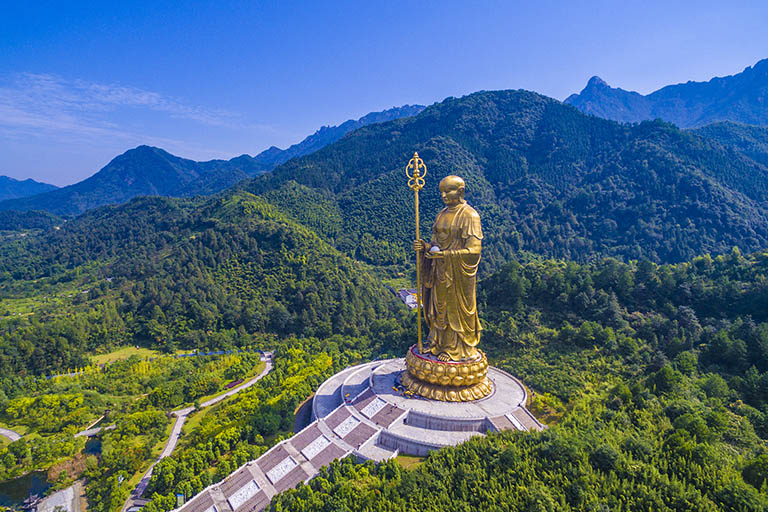
Buddhism, as people may understand, is about inner peace, mindfulness, karma, and the path to spiritual enlightenment. I’m sure you are interested in how Taoism and Buddhism collided in Journey to the West, but it is best appreciated by first meeting the characters of the story – their names, origins, roles, and motivations.
The main characters of Journey to the West
The main 5 characters are original characters for the most part, but are heavily inspired by pre-existing myths and history.
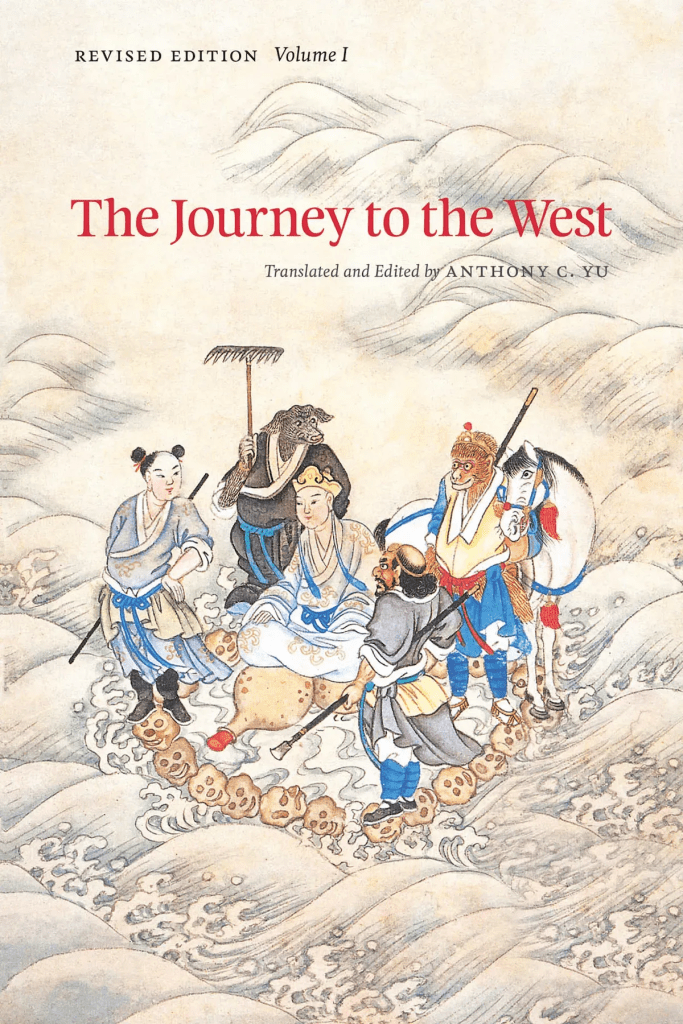
Sun Wukong (孫悟空 – pronounced “Soo-en Woo Koong”): The Monkey King
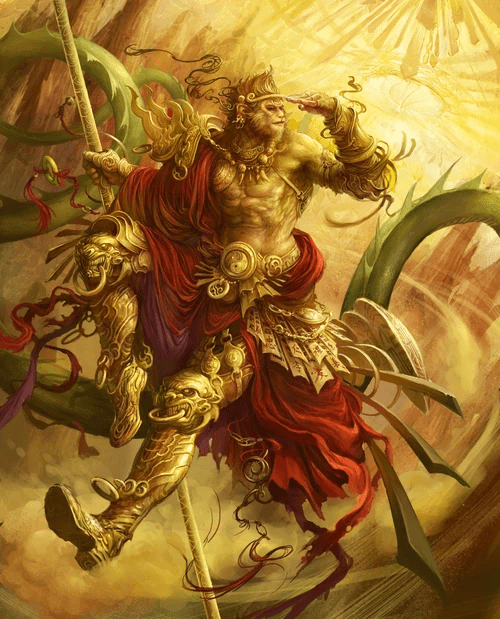
Without a doubt, Sun Wukong is the most influential and culturally important character in not only China, but all of East Asia. Sun Wukong’s fame and popularity, while relatively unknown to the West, is a household name in China, Korea, Japan, Vietnam, etc. His cultural impact and fame can be compared to that of Jesus Christ in western countries.
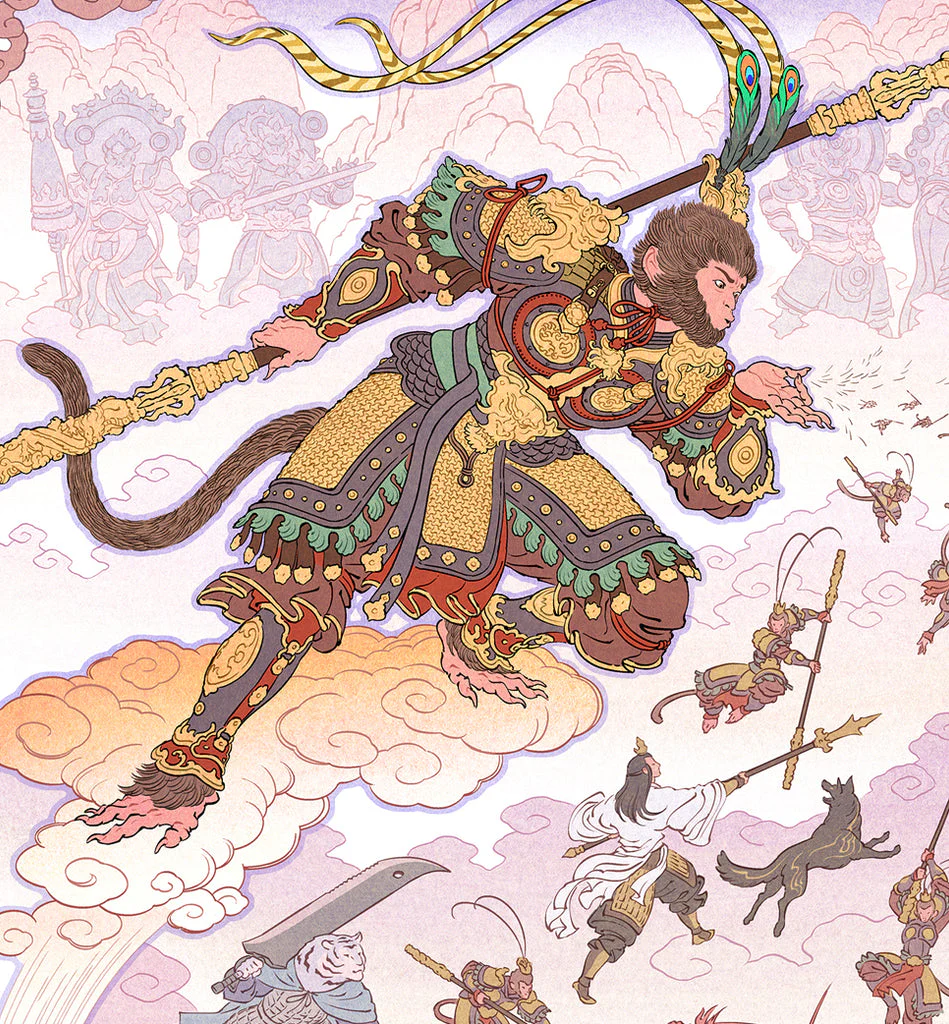
The Monkey King who born out of a stone in Flower Fruit Mountain was likely based on earlier Taoist tales of rebellious, magical monkeys. People also theorize that he is based on Hanuman – a Hindu monkey deity known for his loyalty. However, Journey to the West is the first to fully flesh out the Taoist monkey with a complete storyline and character development. His surname “Sun” (孫), closely resembles the human surname of the same pronunciation, only Wukong’s name is the name for a monkey/macaque. His name “Wukong” (悟空), means “awakened to emptiness” or “aware of vacuity”, depending on your interpretation, which follows the same naming scheme (wu-something) as the other 2 disciplines of Tang Sanzang.
Chaos in Heaven (大闹天宫) – Sun Wukong’s Prequel
Wukong’s backstory took place in Heaven – where the Jade Emperor resided and ruled.
The Jade Emperor (玉皇大帝)
The Jade Emperor is depicted as a moral ruler of the Heavens, with supreme power and authority over all. He delegates missions and judgments throughout Journey to the West to various immortals and gods.
As the fictional birthchild of Taoism and Buddhism, Journey to the West stayed truthful to the Taoist depiction of the Jade Emperor. Wu Cheng’en challenged the conventional order imposed by the Taoist mythological hierarchy by incorporating a loose cannon like Sun Wukong into the classic story of gods and monsters.
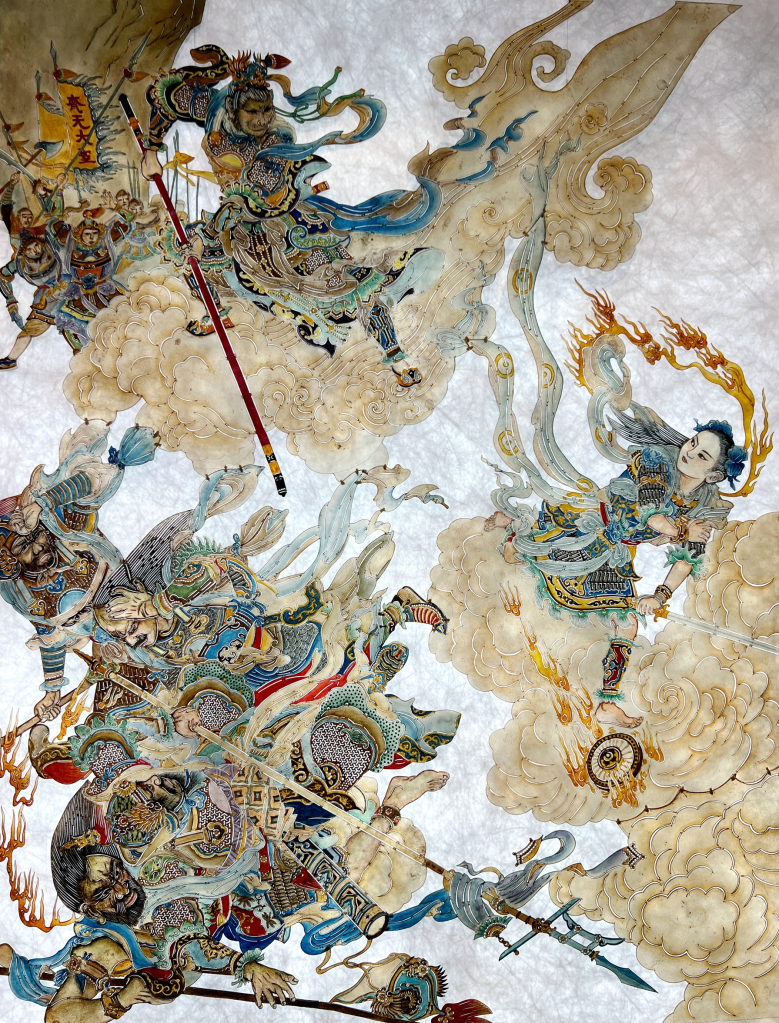
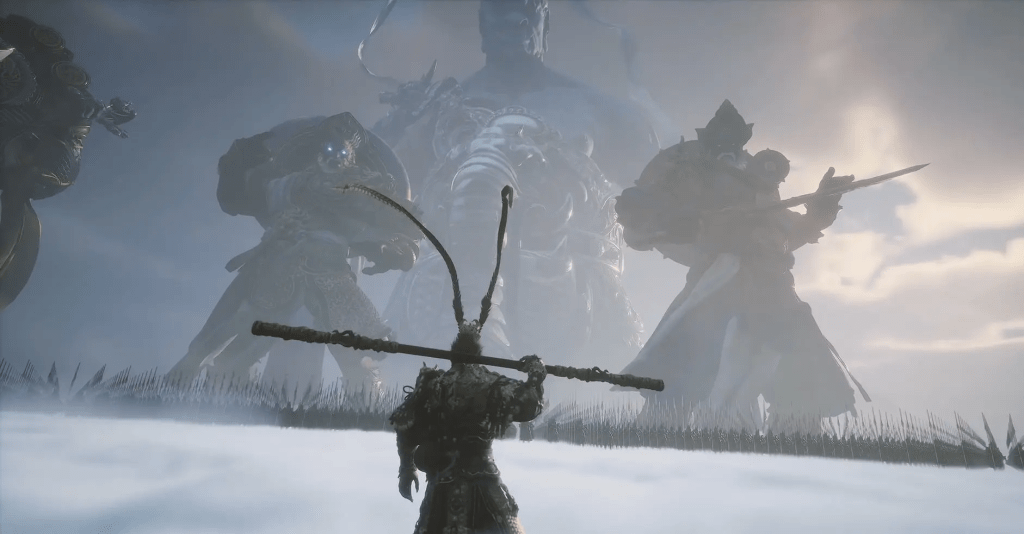
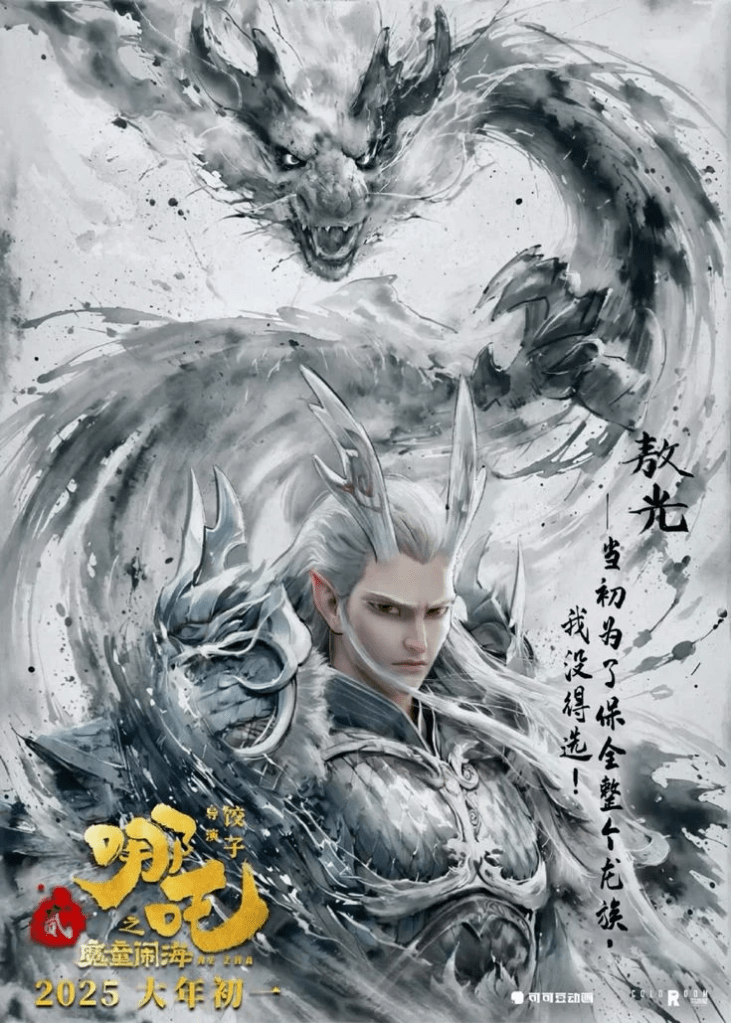
Wukong was an unhinged and egotistical monkey who respected no one. He first went to the Dragon King of the East Sea (东海龙王) Ao Guang (敖广)’s Dragon Palace and took a few items, including his Ruyi Staff and armor. After the Dragon King was humiliated and complained to the Jade Emperor, Sun Wukong was given a position in the heavens to manage the horse stable and the Immortality Peach orchard (to keep tabs on him). Wukong, as a menace, proceeded to eat all the peaches and the pills of immortality, and drink all the wine without a care. The Jade Emperor was furious, and sent in his celestial army to punish the Monkey King – who beat the entire army of 100,000 soldiers, 28 constellations, Nezha, and the Four Heavenly Kings (all cannon fodders to the Monkey King himself). The Jade Emperor then sent out his own nephew, Erlang Shen (二郎神) to fight Sun Wukong. The two were evenly matched, but as the battle escalated, Wukong became increasingly more terrifying, which scared away his fellow monkey army. Seeing this, Wukong became disheartened and lost his will to fight, then tried to run away by transforming into a fish. Erlang Shen responded by shapeshifting as well, and the two of them kept shapeshifting into more and more powerful beings, until Laozi (Taoist elder) hit Wukong from the back and knocked him unconscious.
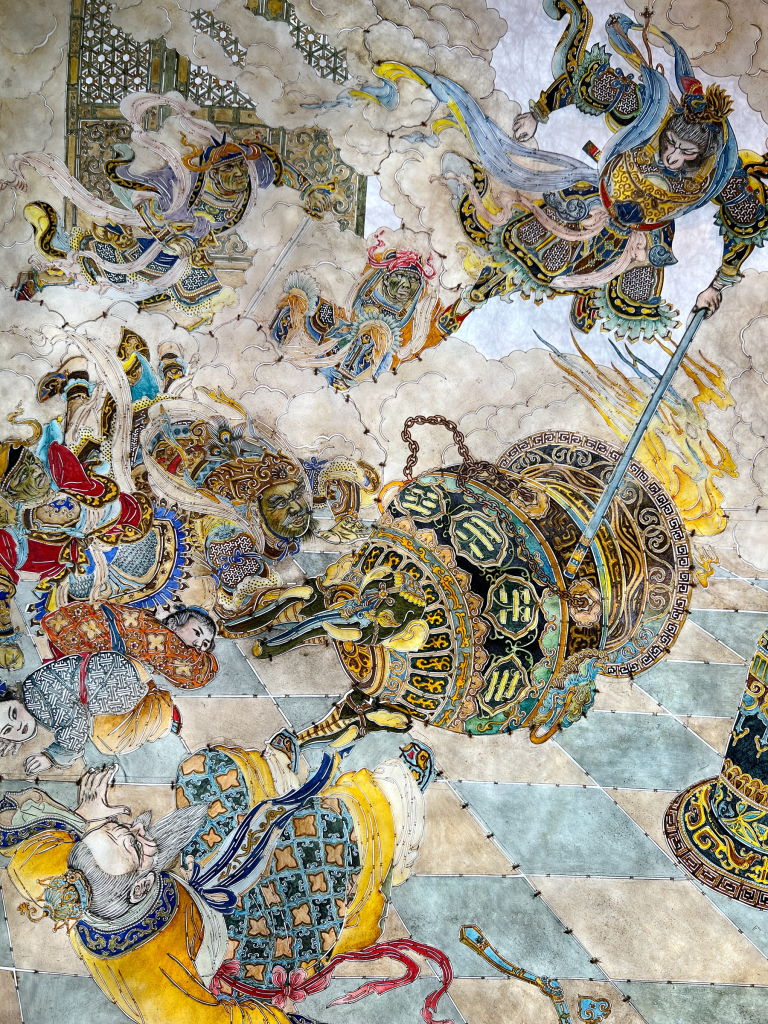
They tried to burn the Monkey King with Laozi’s samadhi fires (said to rival the Buddha himself in power) in a cauldron, so Laozi could turn Wukong back into a pill of immortality. 49 days later, Wukong jumps out of the cauldron, survived by hiding in a relatively safe corner, while the samadhi fire reinforced his body, making him even stronger, and gave him the new power of Fiery Eyes, Golden Pupils (火眼金睛; Huǒyǎn Jīnjīng) to see through evil.
Wukong smashed the cauldron, and went towards Heaven’s main chamber to confront the Jade Emperor himself. The Jade Emperor finally decided to call upon the Buddha.
The Great Buddha / Buddha Tathāgata (如來佛祖 rú lái fó zǔ)
The Great Buddha heeded to the Jade Emperor’s call, and showed up to the scene. Wukong proclaimed that he should become the new Jade Emperor, to which Buddha listened and proposed a wager – if Wukong can jump out of the Buddha’s palm, then he will be free, to which Wukong accepts.
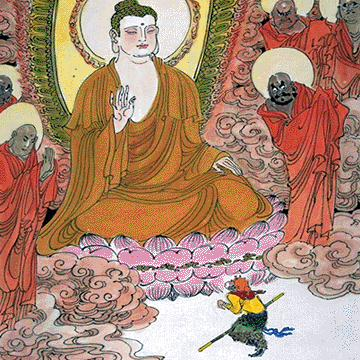
Wukong jumped and lept incredibly far. So far that he thought he had gone to the edge of the universe. Turns out, he never even left the Buddha’s palm. As a punishment, Buddha restrained Wukong under the Five Elements Mountain (五行山 – wǔ xíng shān) for 500 years.
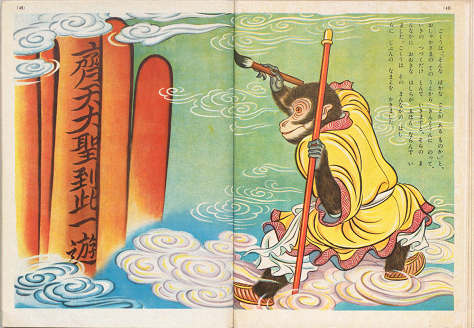
After the imprisonment, the Boddhisavta Guanyin (观音菩萨 – guān yīn pú sà; known for her compassion and love) freed Wukong and gave him the job of accompanying a monk named Tang Sanzang (唐三藏) to the Western kingdoms (India) to retrieve the sacred Buddhist sutras. With that, the story of Journey to the West officially began.
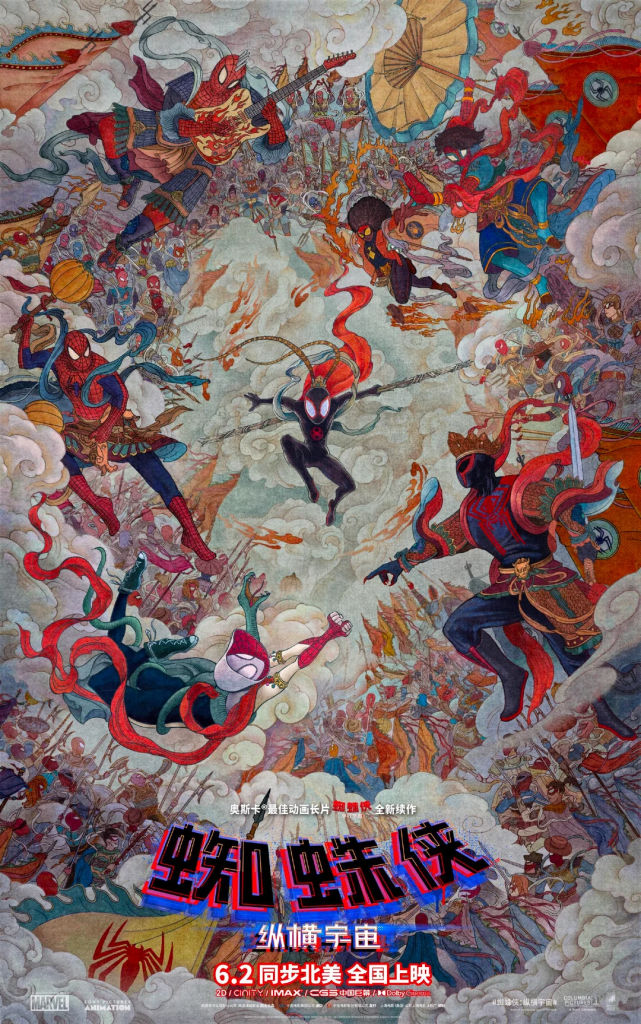
Fun fact: Spiderman: Across the Spider-verse‘s Chinese release came with a specially illustrated poster inspired by Sun Wukong’s “Chaos in Heaven”, and it is breathtaking. If you have seen the movie, then you will understand the parallel.
Wukong’s other titles
Self-proclaimed: “The Great Sage Equal to Heaven” (齐天大圣 – qí tiān dà shèng),
Self-proclaimed: “Handsome Monkey King” (美猴王 – měi hóu wáng),
Given by Buddha at the end of the story: “Victorious Fighting Buddha” (斗战胜佛 – dòu zhàn shèng fó).
Given by Jade Emperor: “Horse Keeper” (弼马温 – bì mǎ wēn, used by his enemies to mock him)
Sun Wukong’s powers
Wukong was extremely overpowered in Journey to the West, his powers include, but are not limited to (fans of the series will know these by heart):
- able to travel 54,000 km (十万八千里: 10,8000 li, canonical figure) in one somersault
- Fiery Eyes, Golden Pupils (火眼金睛; huǒ yǎn jīn jīng): enables him to see through human nature – good from evil, truth from lies, poor from rich, dispel illusions and disguises, see 500km away (150km – 300km at night; canonical figure)
- used the Ruyi Staff (如意金箍棒 rú yì jīn gū bàng / 定海神针 dìng hǎi shén zhēn), also known as the “Godly Stabilizing Pillar of the Four Seas”. Reluctantly given the Dragon King of the East Sea – Ao Guang. A weapon so heavy that only the Monkey King could wield. The staff could change size, elongate, fly, attack all according to Wukong’s will. It weighed roughly 7960 kg (canonical figure).
- rides on a nimbus-cloud (筋斗云 jīn dǒu yún – ancient Bugatti)
- duplicate himself with just one strand of his hair
- 72 Earthly transformations into anything he wants while gaining their powers
- Extremely strong
- Martial Art expert
- control the weather
- freeze people in place
- become invisible
- Indestructible body
- Immunity to fire and water
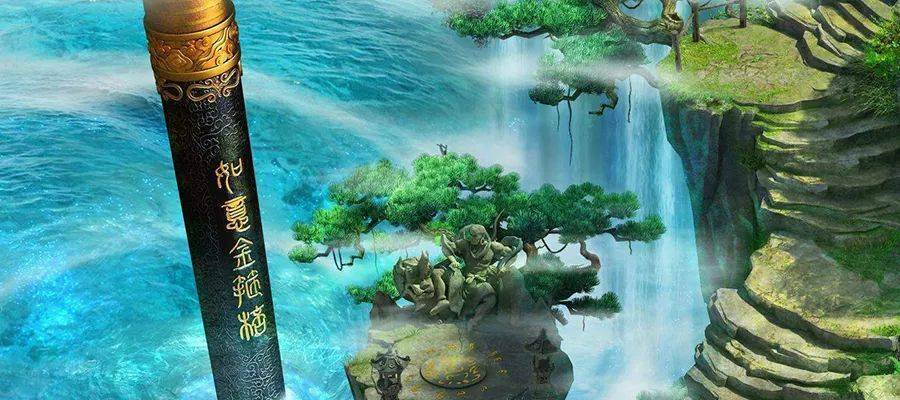
He was basically designed like a DC Comics (Detective Comics Comics) character, except he had no weaknesses. His overpowered-ness was balanced out in the story’s narrative by his master, Tang Sanzang, who acted as a moral guidance for Wukong throughout the story, to teach him about the Buddhist principle of humility. Thus, Wukong was not allowed to act as he wished, and had to travel to the west by foot, alongside his human master, when he could have easily gone to India and back within seconds and retrieved the sutras. By the end of the story, it was shown that the true objective was for the group to overcome a total of 81 challenges and learn various lessons from them. “The real treasures were the lessons we learned along the way” type of stuff.
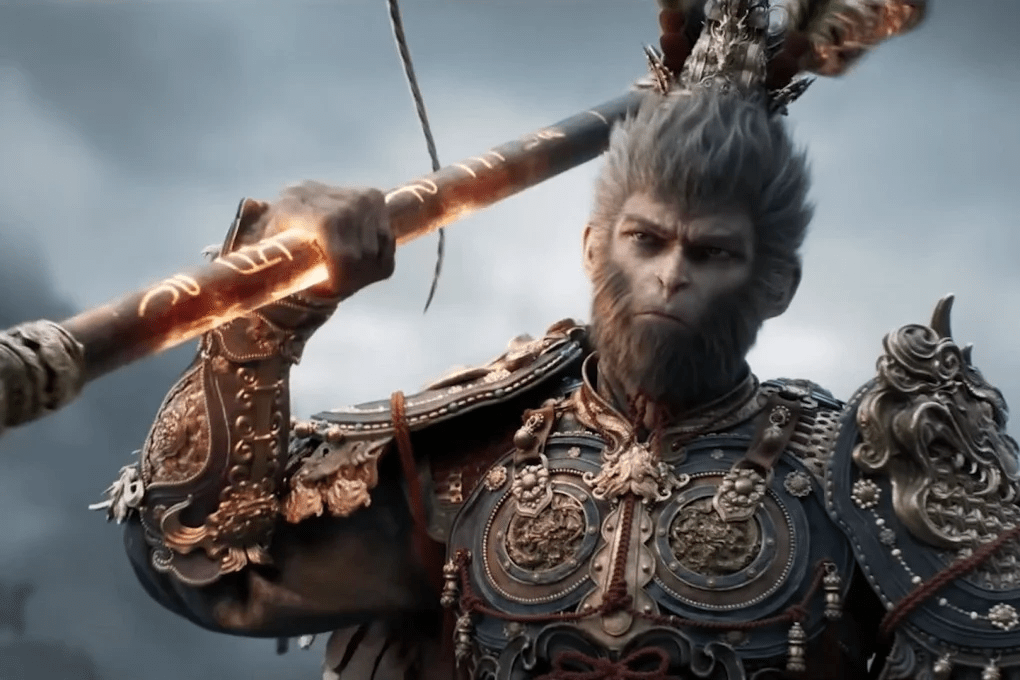
Wukong’s “fight everything” principle was juxtaposed with Tang Sanzang’s pacifist philosophy. As a condition for his freedom from imprisonment, he was forced to wear the “Tightening Headband” (紧箍) that would bring him excrutiating headaches everytime Sanzang recited the “headache mantra” (紧箍咒). This mantra was often used right before Wukong was about to kill a demon if Tang Sanzang saw a sliver of hope for the demon’s redemption, which happened basically every single time. Then Sanzang would be captured by the demons (because apparently everyone heard about a rumor that eating Sanzang would give them immortality) while Wukong struggled with his headache (the demons can’t damage Wukong so they just left him alone).
Even though this happened over and over again, Tang Sanzang’s dedication to showing mercy never wavered. He never let his previous experiences affect how he would approach the next demon or monster, and would always show kindness that was almost never reciprocated (a lesson everyone should learn from).
Despite constantly being held back by his master throughout the story, Wukong learned to be kind, forgiving, and humble. Perhaps he was touched by the way Tang Sanzang treated others, and understood the value of seeking peaceful alternatives to violence. His undying loyalty to his master, mastery of the Buddhist teachings and virtues, and the successful pilgrimage rewarded him with “Buddhahood” (“awakened one”).
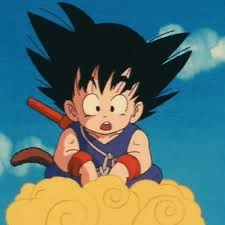
Sun Wukong is known for being the inspiration for the protagonist of the popular manga and anime series, “Dragonball” – Son Goku, who goes by the Japanese reading of the Chinese name “Sun Wukong” (孫悟空). In the story of “Dragonball”, Goku is also a battle maniac monkey who flew around on his nimbus cloud. The core difference between Goku and Wukong is that Goku’s journey focused on becoming stronger, whereas Wukong’s journey started out as being extremely overpowered, and had to learn humility.
Besides Goku, Sun Wukong is also the inspiration for One Piece’s Monkey D. Luffy. He is also a character in DC, Marvel, Dota 2, League of Legends, Warframe, Civilization, and so many more titles. The Monkey King’s influence is unmatched in the world, especially in East Asia, surpassing that of any individual character in Greek, Roman, Egyptian, or Norse mythology.
Tang Sanzang (唐三藏 / Xuanzang):
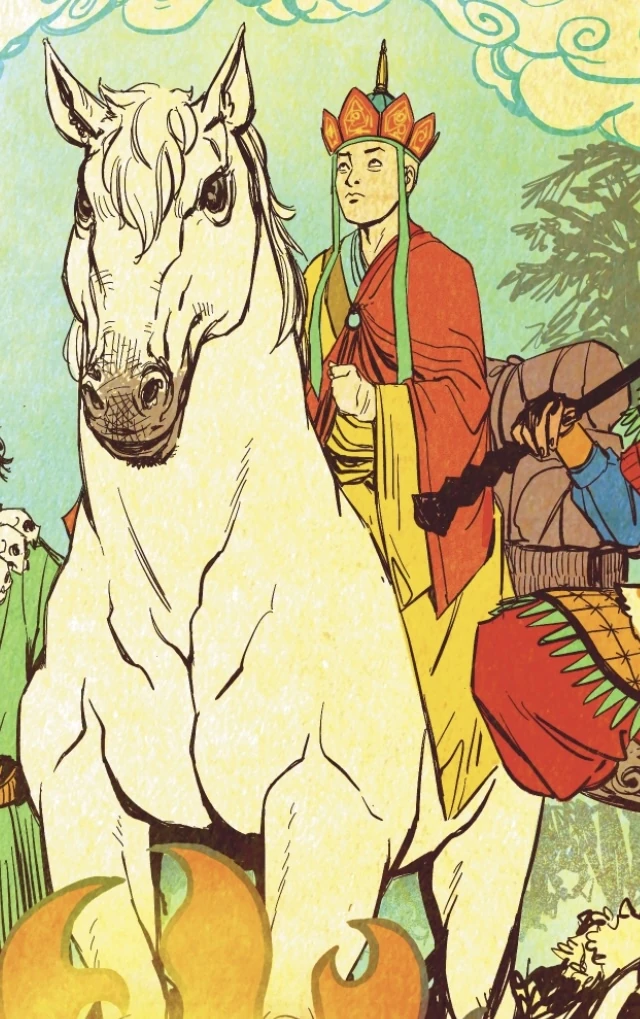
Born to the surname “Chen”, he was the only Buddhist inspired character in the main crew. Sanzang was based on the real life monk from the Tang dynasty, Xuanzang (玄奘), who traveled to India to bring back Buddhist scriptures. His name was a reference to the Tipiṭaka (त्रिपिटक), the “Triple Baskets”, a collection of the sacred Buddhist Scriptures, which was also the name of the scriptures the main cast was seeking in the story. The name “Sanzang” literally translates to “Triple Baskets”. His better known name, his courtesy name, was “Tang Seng” (唐僧 – lit. “Tang the Monk”). His surname “Tang” (唐), was given to him by his sworn brother, the Taizong Emperor of Tang Dynasty, for his pilgrimage.
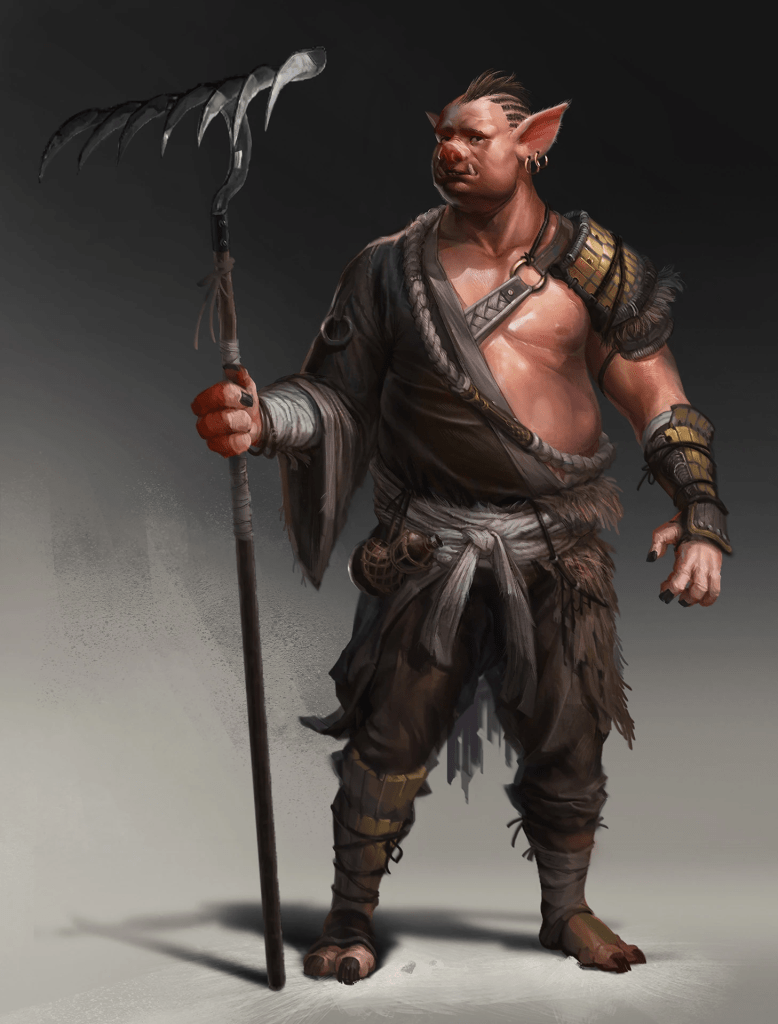
Zhu Bajie (猪八戒)
A Taoist monk pervert who was previous known as “Marshal General of Heavenly Canopy” (天篷元帅) (Tiānpéng Yuánshuài), then banished to the mortal realm for trying to seduce Chang’e. The Jade Emperor reincarnated him on Earth into a pig monster. His name “Bajie” (八戒), given by Sanzang, translates to “eight restraints”, in order to teach him the Buddhist principle of abstaining from immoral acts, such as killing, stealing, lying, sexual misconducts, etc. By the end of Journey to the West, he ascended to Buddhahood and was given the name Wuneng (悟能 – “Awakened ability”) by Guanyin (觀音 / Avalokiteśvara), a reward for his character development through the journey.
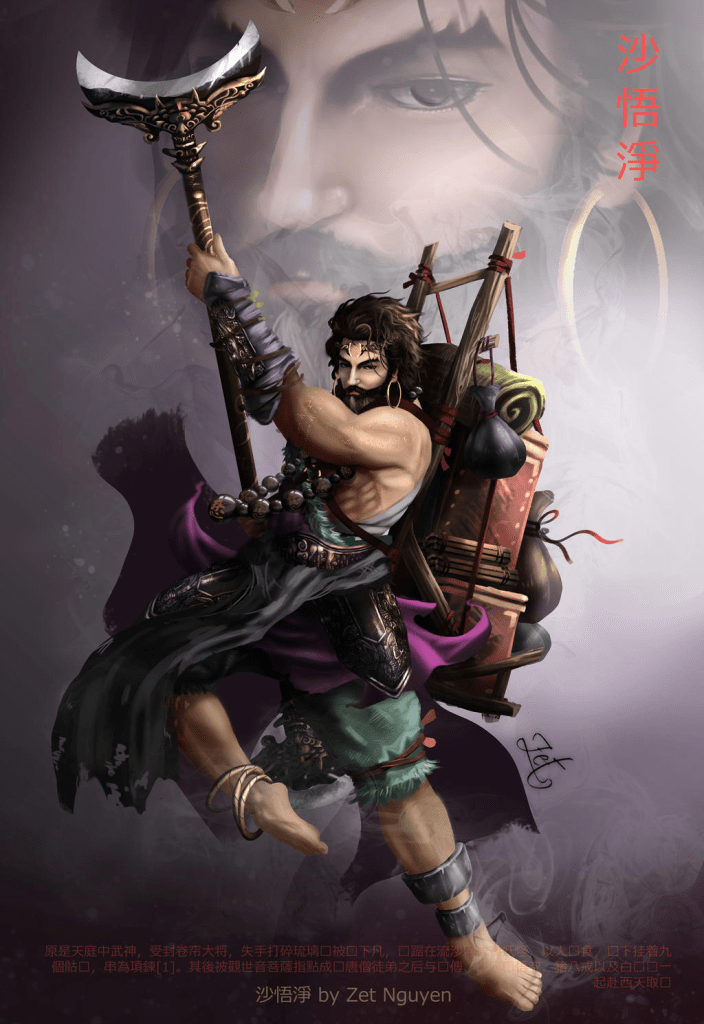
Sha Heshang / Sha Seng (沙和尚 / 沙僧)
Both of his names mean “Sand Monk”, just colloquial and formal versions of the same name. Like Zhu Bajie, he was also once a celestial general, known as “Curtain-Lifting General” (卷帘大将, Juǎnlián Dàjiàng). He broke a goblet, and was banished, and became a river dwelling sand demon who ate travelers. His name Wujing (悟净 – “Awakened Purity”), reflects his Buddhist path of atonement and inner peace. Throughout the story, he was often characterized as someone who is quiet, loyal, and composed.
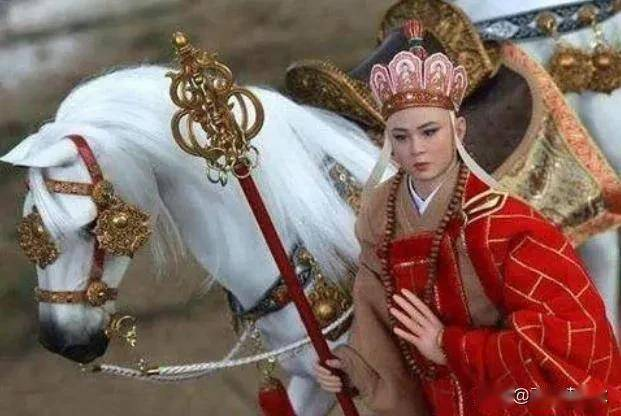
Bailong Ma (白龙马 – White Dragon Horse)
The Dragon King of the West Sea’s third son (西海龙王三太子). He was punished by the Dragon Palace for setting fire to a priceless pearl. Originally intended to die, Boddhisavta Guanyin intervened and saved him by giving him a chance of redemption – becoming Tang Sanzang’s mount, and accompanying him on his pilgrimage to the West. He became a white horse, did not speak at all throughout the story, and was given the title of Dragon Horse Deity (龙马神). His dragon form was restored, and became a celestial deity as a reward for his humility, patience and loyalty.
Minor characters in Journey to the West characters
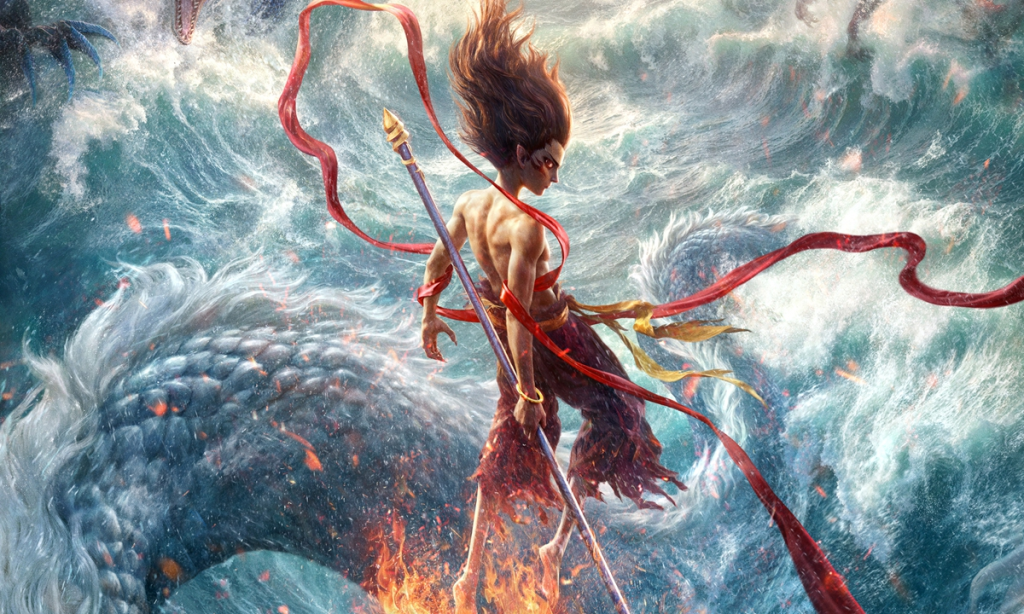
Nezha (哪吒)
The child prodigy general, born with a natural mastery of the fire element. A highly prominent character in Taoist folklore. Nezha has a few series dedicated to himself, as well as the highest-grossing animated movie of all time – Nezha 2. His body was crafted from lotus roots, a symbol of purity. He wielded the famous tools of: Wind Fire Wheels (风火轮) – flaming wheels beneath his feet that let him fly, Universe Ring (乾坤圈) – a powerful golden ring, and Red Armillary Sash (混天绫) – a magical ribbon used in battle.
He is a child deity, born of supreme powers. He grew up rebellious and often challenged the Heavens, very similar to Sun Wukong in this regard. Despite being a menace, he would always defend humans against powerful demons and gods. He is a complex character who has hurt innocent people as well as helped them, and eventually learning to wield his power, and becoming a symbol of mortal justice and protector of those who suffer from injustice – embodying his theme of “fire” as someone who can bring both prosperity and destruction.
Since Nezha was born from human parents as a fiery ball, his undying loyalty lies with his parents, and ultimately to the Heavens and the order it imposes. Which is why the Jade Emperor was able to call upon Nezha in an attempt to subdue the Monkey King during the events of Chaos in Heaven. Today, he is often worshipped as a spiritual symbol in China.
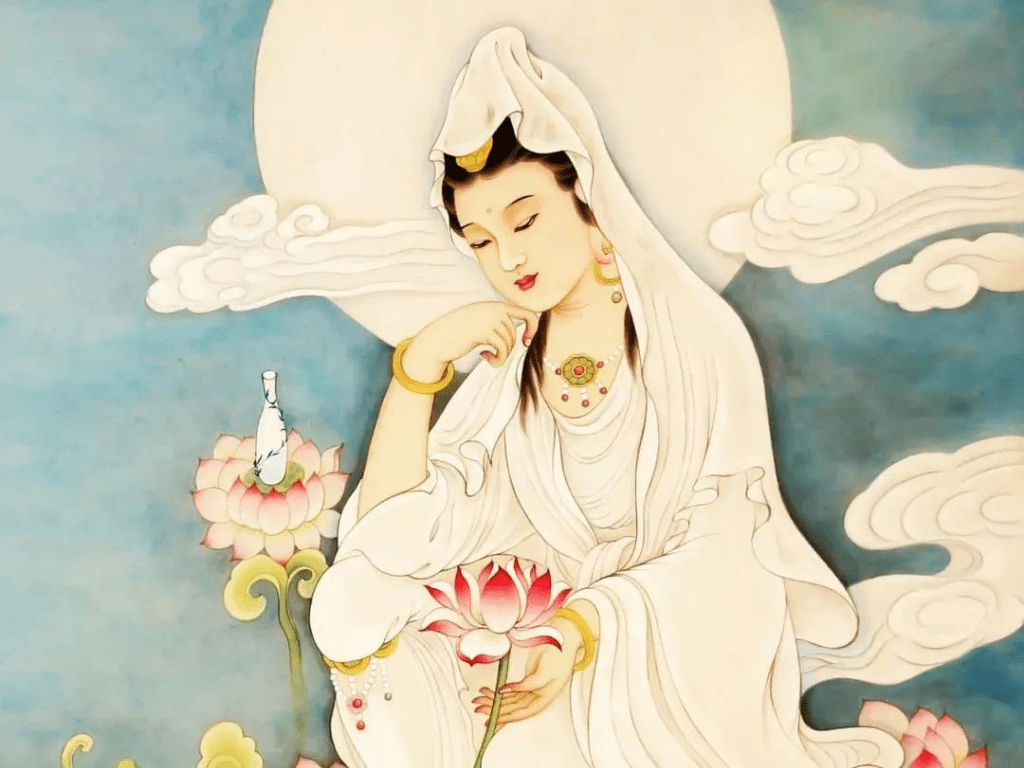
Boddhisavta Guanyin (观音菩萨 – guān yīn pú sà: The one who perceives the sound of the world)
Buddhist boddhisavta who embodies compassion, love, and purity. She is based on a male deity in Indian mythology, but took the form of a female boddhisavta in Chinese Buddhism.
Boddhisavtas are those who delay their own ascension to Buddhahood by helping others achieve spiritual liberation. In Journey to the West, Guanyi is no different. She was often seen intervening in punishments when she could see a path for redemption. She helped Tang Sanzang, Sun Wukong, Zhu Bajie, and Sha Seng with their pilgrimage, a truly maternal figure of grace and protection who also doubled as the bridge between the heaven and mortals.
In certain Chinese Buddhist texts, Boddhisavta Guanyin is depicted to take on any form – male, female, gender fluid, any age and form, whatever it takes to help those in need achieve enlightenment.
If you have watched Hunter x Hunter, the Thousand-hand Guanyin Boddhisavta was also the move Netero used against the Chimera Ant King.
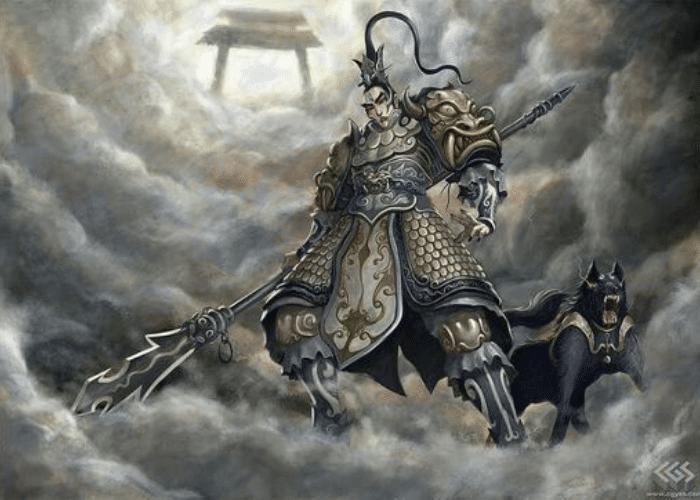
Erlang Shen (二郎神 – “Second Son God”)
The Jade Emperor’s nephew. He is a rather mysterious, but powerful figure in Taoist mythology. He has an iconic “Heaven Eye” (天眼) on his forehead that can see truths across realms. He wields a Three-pointed spear (三尖两刃刀), cloud-riding boots, and has a loyal companion by the name of “Howling Celestial Hound” (哮天犬, Xiaotian Quan). He is powerful and resourceful, defeating Wukong in battle through trickery, but shows compassion by letting Sun Wukong live and be redeemed.
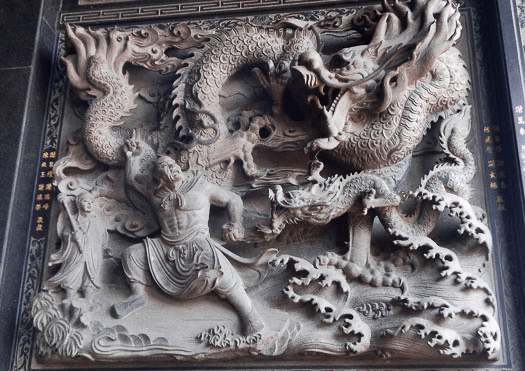
Dragon King of the East Sea (东海龙王) Ao Guang (敖广): primarily a Taoist character, represents authority, power, wealth. Responsible for nature, rain, and the balance of elements. His power as the king of the East Sea was challenged by Wukong’s unhinged behavior and frightening power, and was forced to let Wukong take whatever treasures he wanted, including his Ruyi staff and armor. Ao Guang then made a complaint to the Jade Emperor, which led to the Chaos in Heaven.
What is the meaning behind the Taoist and Buddhist fusion?
What does Journey to the West tell us?
Journey to the West is a story that blends Buddhist and Taoist characters, myths, and most importantly, values. The two spiritual belief systems, although they differ in their roots, are intertwined in the context of traditional Chinese culture. Taoism and Buddhism both heavily influenced China, and share more commonalities than differences.
In Journey to the West, the Taoist Jade Emperor and the Buddhist Great Buddha were both figures of authority, coexisting in the same story but ruling different parts of the cosmos, representing different values. The Jade Emperor is a symbol of authority, order, and the “way” (道 – Tao) of mastering spirituality; whereas the Great Buddha is a symbol of mercy, detachment from Earthly desires, and spiritual growth. Taoism rewards cultivation and ascension to immortality; Buddhism rewards becoming one with the universe. The two counter balance each other like Yin and Yang. The cycle of learning both restraint and mastery is seen as the ultimate goal for Sun Wukong – trained in Taoist arts, but ultimately tamed by Buddhist compassion.
In the story, Taoism provided the basis for world-building – heroes, demons, gods, monsters, supernatural forces, the desire for immortality, and the heavenly bureaucratic structure (Dragon Kings, Jade Emperor, Laozi, Erlang Shen, Nezha). Buddhism provided a goal, a purpose, a destination – Tang Sanzang, Buddha, Boddhisavta Guanyin, and the Tripitaka sutra from India. I personally interpret this as mirroring the real-world spiritual development of ancient China, where Buddhism, which came after Taoism and introduced concepts such as karma, enlightenment (nirvana), and the afterlife.
Taoism and Buddhism; cultivation and detachment; excellence and purity; Yin and Yang.
Conclusion
Chinese mythology is ancient. It is vast. It is seemingly endless. It features demons, monsters, immortals, gods, heroes, villains, and complex anti-heroes (like Nezha and Sun Wukong). Even though most Chinese people today know that these stories are all fictional, there is no denying the significant influence it had on Chinese philosophy. Whether it is familial values, humility, karma, or social harmony, these stories have ingrained a certain way of life in Chinese people, even among those who do not believe in a higher being.
Chinese mythology isn’t quite like Greek and Roman mythology where the characters are more or less completely treated as fictional beings and exist in an isolated vacuum of a bygone era; it is also unlike Indian mythology where the Hindu deities still have genuine believers and worshippers. Chinese mythology’s identity lies somewhere in the middle.
If you ask anyone in China whether they know the stories of Nuwa, or Sun Wukung, or Nezha, or Chang’e. They will say “yes, of course”. They might even tell you about the profound impact the stories have had on them growing up. But does anyone really believe these stories to be true? I’m willing to bet very few do. In this sense, Chinese mythology can be viewed more akin to Japanese Shinto mythology – which, in my humble view, played different roles in ancient Japan (maybe a blog post idea for the future).
The legacies of these myths are abundant even in popular culture – anime, TV, movies, video games, music, etc. It shows us that the passage of time hasg not erased our passion for these stories. In fact, I would even argue that they are more popular than ever, with Nezha 2 and Black Myth Wukong breaking sales records.
All the myths, legends, and of course, Journey to the West, are merely reflections and commentaries on the Chinese spiritual landscape. As the world continues to modernize and transform, Chinese people and their values have also been shifting. But at our core, striving for both excellence and humility have remained strong in our hearts for millenia. After all, Chinese culture is on its own Journey (to the west, haha) – finding a balance between ancient wisdom and modern thoughts.
Afterword
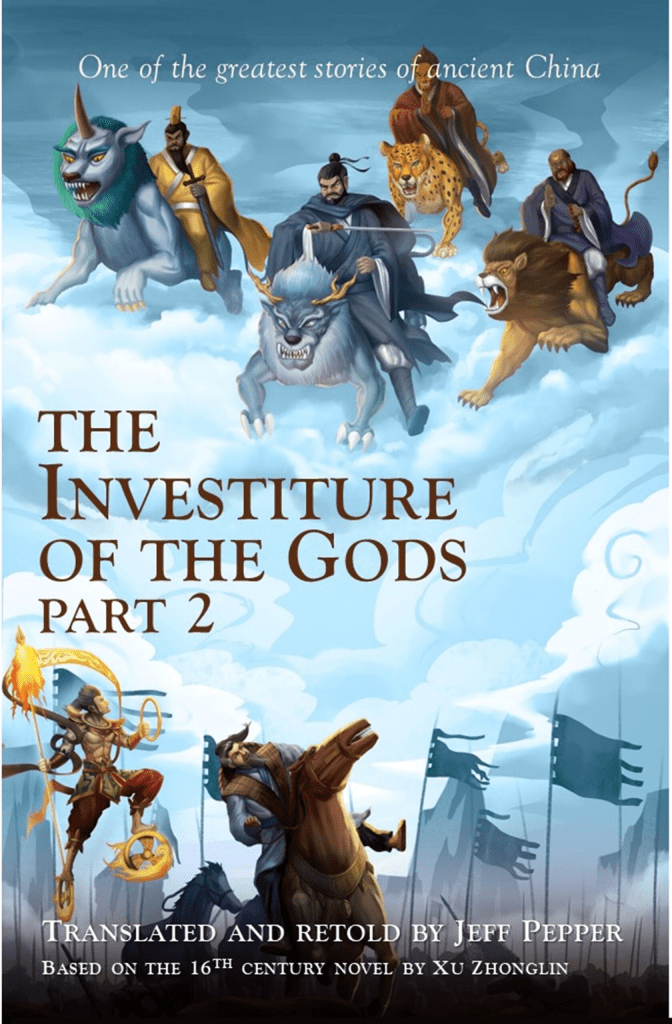
I still want to talk about The Investiture of the Gods (封神演义 – fēng shén yǎn yì), a book that falls in the same genre as Journey to the West, with more focus on heavenly bureaucracy. But this blog post is getting way too long. I really want to cover as much as possible about Chinese mythology in one post, rather than dedicating multiple posts to this topoic, because I also want to write about other things – like history, geography, politics, or, god forbid, geopolitics (dun dun dunnn). II think I’ll save The Investiture of the Gods for another time…
 David's Blog
Leave a comment