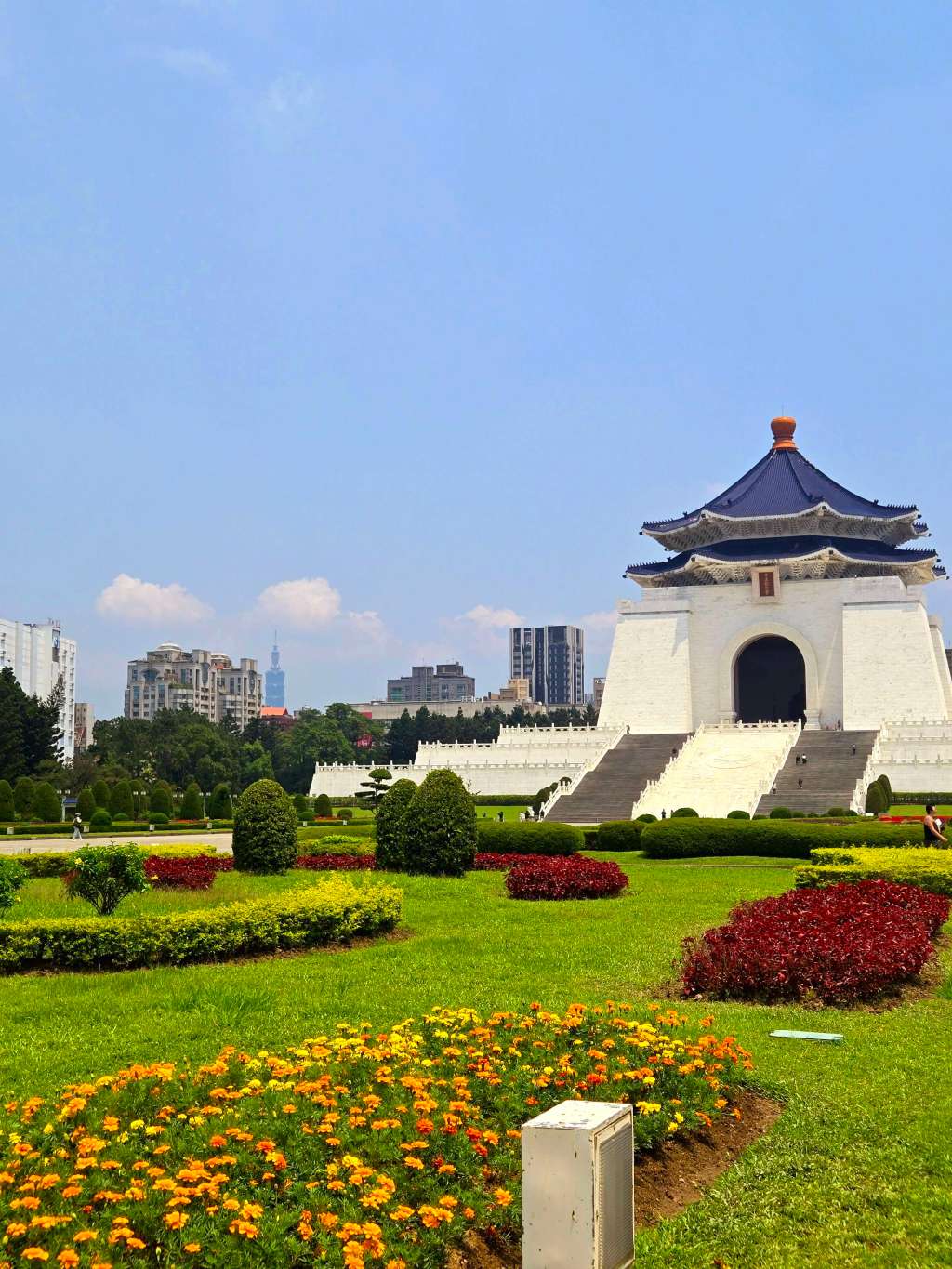
i can definitely see the Japanese colonial era (日治时代) influence with the area names (e.g. ximenting using the 町) and a few places keeping their names based on areas in japan (松山[Song Shan/Matsuyama],三重 [San Chong/Mie],高雄[Kao Hsiung/Takao] 板橋 [Banqiao/Itabashi]) and roads named after places in China (廣州路,南京路,昆明路) as well as japanese chains like family mart 711 being everywhere and store sign labeling like “2F more seats” (smth that ive only noticed in japan). But also chinese influence like architecture style and ppl being more relaxed and laid back even when working. convenience store worker here was just watching youtube video until i needed to buy smthing, thats smth u will never see in Japan but plenty in china.
the random bikes parked everywhere, buckets of water, exposed construction equipments, bricks, tiles, flooring that clearly hasnt been maintained in years, the way ppl drive + honk, walk, dress, are all surprisingly chinese
Japan famously is a lot more restrictive in terms of upkeep of public infrastructure and even behavior, Japanese people are super reserved in public, and I thought id see more of that here.
MRT has 30s trains during rush hour, very cool. It seems only old people use the priority seats. another difference between here and Tokyo. Young adults or adults very VERY rarely sit there, if they do, they usually have heavy luggage with them. Old people give their seats to little kids. Very lovely to see. Trains here have actual fines for eating on the train. Trains here are also a lot shakier when it stops at a station, likely due to the high speed as it approaches the station. They use the word 月台 (same as HK) for their platform, whereas Mainland uses 站台. I was wondering why? The platform isn’t shaped like a moon at all or have any moon motifs. So I had to google to find out why, “古代帝王上月台望月” (ancient emperors step atop the “Moon Platform” to gaze at the moon). Very cool name origin.
too much weeb shit, kinda psychotic level of weeb shit. Seriously, even at historical areas, they sell anime merch 😭 or japan related goods like Shiba, shinto shrine, omamori, etc. Pls STOP.
The food, while good, wasn’t really mind blowing level of good, compared to Taiwanese food I’ve had in Van, Tor, and Tokyo. There isn’t as big of a diff as China or Japan’s food vs. overseas. But maybe it’s just the ones I’ve had. Still consistently very high quality and never cheap out on the portions. Small restaurants >>> Ding Tai Fung. Ding Tai Fung is overpriced as hell and the taste really was just okay.
More western toilets than squat toilets here. Many bidets, altho most of them dont work loool. The whole trip I’ve only encountered one functional bidet. Japanese toilets reign supreme.
History of taiwan Summary Notes:
1895 japan rule, 1911 sun yat sen + KMT in mainland, 1925 SYS died to cancer, Chiang kai shek took over, 1928 CKS (a kmt military general guy) unified china + made nanjing capital, 1945 Japan returned taiwan to allies, 1945 CKS and KMT lost civil war and moved to tw, CKS big bad guy authoritarian regime time, many uprisings in tw, white terror, but also did good for education and economic development, CKS controversial af, did good stuff but with very very bad methods that reeks of imperial era, totally diff from Sun Yat Sen’s philosphies of three principles (三民主义 – 民族nationalism without imperial influence, 民权 democracy: military rule -> transition stage -> full democracy, 民生 livelihood of citizens: land reforms, socialist system, state regulation of major resources rather than privitization), but his son Chiang Ching Kuo is much better, CKS also established ties with USA and Japan for post war development, made taiwan develop super duper fast under USA help, whilst allowing USA to use taiwan as a vassal state of east asia, keeping tabs on communist PRC, ROC was officially recognized China by USA and UN until 1971 and 1979, where that status was replaced by PRC in USA and US, but US maintains close ties with taiwan under the US taiwan alliance treaty, a law signed in 1979(? i think)
 David's Blog
Leave a comment