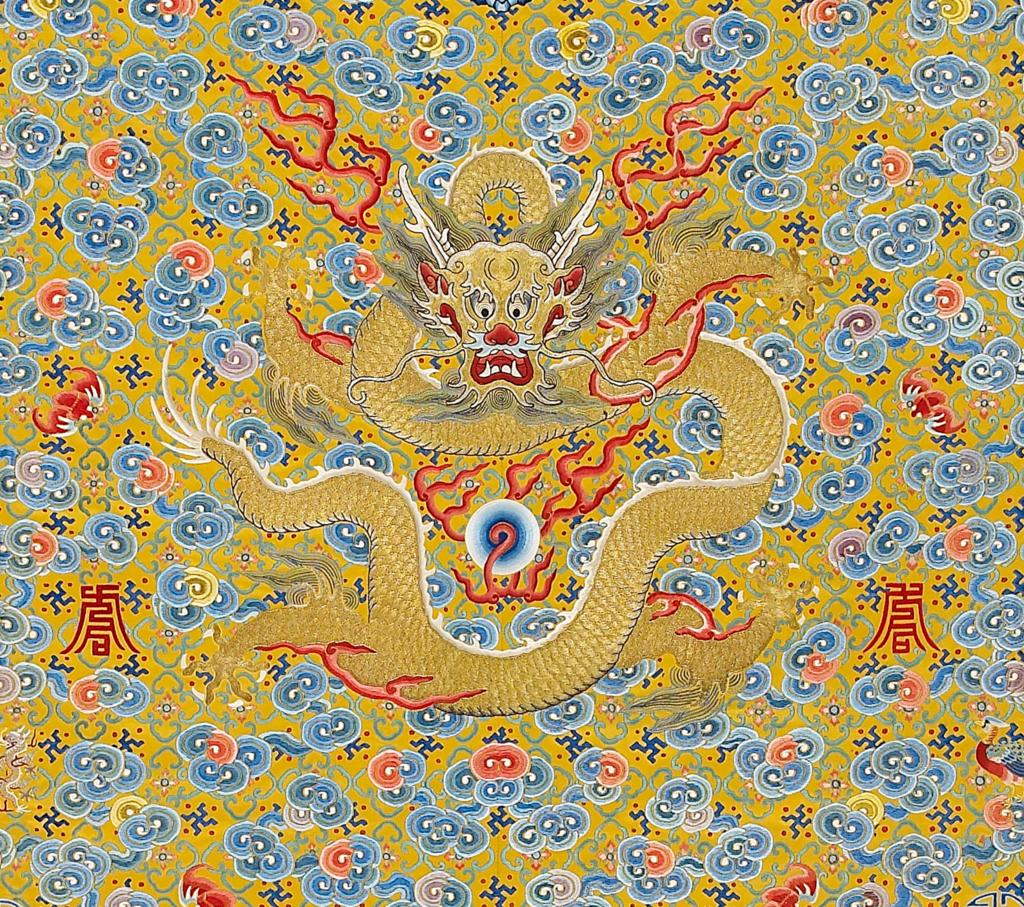
Fun fact – China has been pushing for the word “Loong” to be the official name for Chinese Dragons, as the western “Dragon” does not aptly describe since it only shares some superficial traits with Loong. Thus, for this post, I will use the word “Loong” where I see fit.
Many in the west associate China with Loong / Dragons, understandably due to our unapologetic obsession with them. However, here is a little known fact – we Chinese refer to ourselves as “Descendants of the Loong / Dragon” (龙的传人 / 龍的傳人) – a term popularized by modern music, and mainly used as a symbol of ethnic identity and national pride. However, this sentiment can be traced all the way back to 2700 BCE, with the Yellow Emperor (黄帝), a tribal emperor that is said to be the prehistoric ancestor of Chinese people. According to mythology, he had a dragon on his totem, and was portrayed to ascend to the heavens on a Loong after his death.
Unlike western dragons that are depicted as evil and greedy, a force to be conquered and slain by heroes, Chinese Dragons are symbols of harmony, wisdom, fortune, authority, divinity, and much more (impossible to summarize in one sentence). According to legends, they roam the heavens, earth, and seas, control the weather, and bless the ancient Chinese with fertile lands. It is no wonder these celestial creatures were worshipped by all.
Often appearing in myths and stories such as Shan Hai Jing (山海经 – Classics of Mountains) and Seas, Zuo Zhuan (左传 – The Commentary of Zuo), and even The Journey to the West (西游记), Loong are depicted as god-like creatures beyond the understanding of the common man. Starting from the Qin and Han dynasty, the starting point of Han Chinese civilization, the Loong became a symbol of the emperor – also known as the “True Dragon Son of Heaven (真龙天子 – Zhen Loong Tian Zi)”. The five clawed Loong was exclusively reserved for the Chinese emperor. Which is also why you will never find a non-Imperial Chinese Loong, Japanese Ryuu (竜) or Korean Yong (용) with five claws, only four or three. Ancient Chinese did not mess around when it came to the specs of their Loong, and what kind of Dragons the foreign kingdoms were allowed to import. The emperors may have been (mostly) brutal dictators, but the one thing they knew how to do was aura farming, with their imperial palaces, carvings of Loong on the walls, and of course, the Emperor’s robe – they got that shit on for real.
Some prominent Loong in Chinese mythology:
1. Tianlong (天龙) – Heavenly Dragon: transport the gods and help defend against Yaomo and Guiguai (妖魔鬼怪) – demons.
2. Shenlong (神龙) – Divine/Godly Dragon: god of tempest and rain
3. Dilong (地龙) – Earth Dragon: god of rivers, streams, and inland water; works in harmony with shenlong.
4. Huanglong (黄龙) – Yellow Dragon: Said to be the Loong form of the Yellow Emperor (黄帝) after his death; believed to be the center of the universe; has 5 claws.
5. Qinglong (青龙) – Azure Dragon: One of the four celestial guardians (a separate blog post about the celestial guardians will be written) in Chinese astrology; represents the East and Spring; God of War Guanyu’s weapon is famously named after the Azure Dragon (Azure Dragon Crescent Blade).
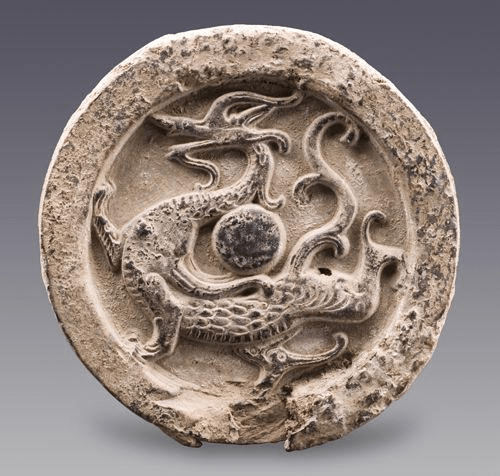
Loong have become so much more than ancient mythological beings. They are now a staple in modern Chinese culture, and will continue to be intertwined with the Sino Legacy for millenia to come. Many things have come to represent traditional China – Buddhism, Taoism, Spring Festival (Chinese New Year), etc., and Loong are an unavoidable part of them all. They played major roles in Journey to the West (Dragon King of the East Sea), Dragon Boat festival, Dragon Dances of Spring Festival, Rex Lapis from Genshin Impact, and even Shenrong from Dragonball.
Portrayed as equals of other mythical beings like the Phoenix (凤凰) and Tiger (虎), popular idioms often included Loong and one of those creatures:
1. 望子成龙,望女成凤 – lit. hope one’s son becomes a Loong, hope one’s daughter becomes a phoenix; translation: hope one’s children to have a bright future
2. 卧虎藏龙 – lit. crouching tiger, hidden Loong; translation: concealing one’s talent.
3. 虎窟龙潭 – lit. tiger’s cave and Loong’s den; translation: dangerous place or places where heroes gather.
My zodiac is the Tiger, which is basically the 2nd best one, after Loong.
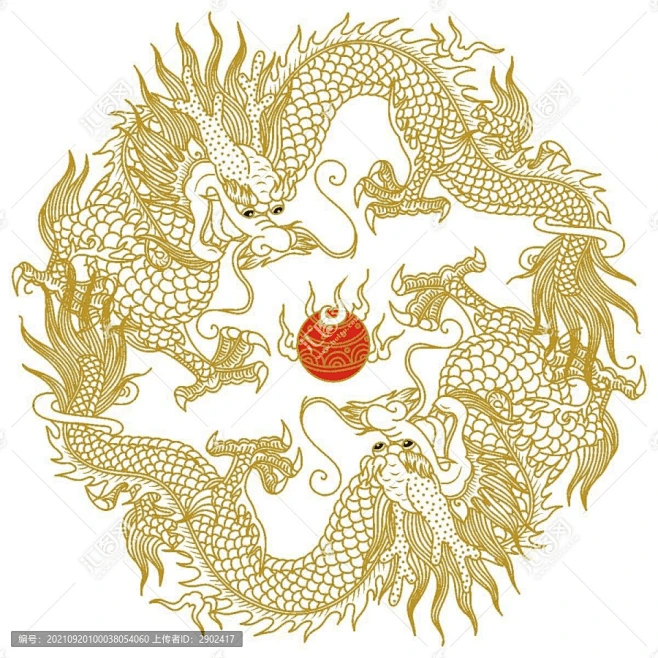
Another famous motif in Chinese culture is the “Double Dragon Playing with Pearls” (双龙戏珠). The flaming pearl represents wisdom, enlightenment, spiritual energy, and cosmic truth. They come together to create a harmony of Yin and Yang, and symbolizes heavenly authority. For that reason, it can be found on the Emperor’s Dragon Robe (Loong-pao).
I hope you enjoyed learning about (what I think to be) the coolest part of Chinese mythology – Loong / Dragons
 David's Blog
Leave a comment